Introduction to narrative in a board game
Narrative in a board game is the element that gives meaning, coherence, and depth to the modern tabletop experience. Behind every great game, there is a story that sustains it. Dice, tokens, or cards may change over time, but what truly connects players to the experience is the narrative that guides every action and decision.
In an era where games aim to evoke real emotions, psychological involvement, and moral reflection, narrative in a board game has become a fundamental pillar of design. Opus Mortis stands as a clear example of how a well-crafted story can transform a board into a living, unsettling, and memorable stage. In this article, we analyze why narrative in a board game is now essential and how Opus Mortis elevates it into an experience of psychological horror and collective storytelling.
“During the development of Opus Mortis, we understood that the story should not accompany the game, but guide it.”
— Opus Mortis creative team
Narrative in a board game as the invisible soul of design
In early board games, rules were the absolute center of the experience. Winning or losing defined the value of a session. However, the evolution of the medium has shown that narrative in a board game is what truly gives meaning to every mechanic.
Today, it is no longer just about moving pieces, but about understanding why we do so and what consequences each action has within the game’s universe. A well-designed narrative in a board game:
-
Provides context and coherence to mechanics.
-
Creates empathy between players and their characters.
-
Turns the session into an emotional journey.
-
Strengthens immersion and long-term memory of the experience.
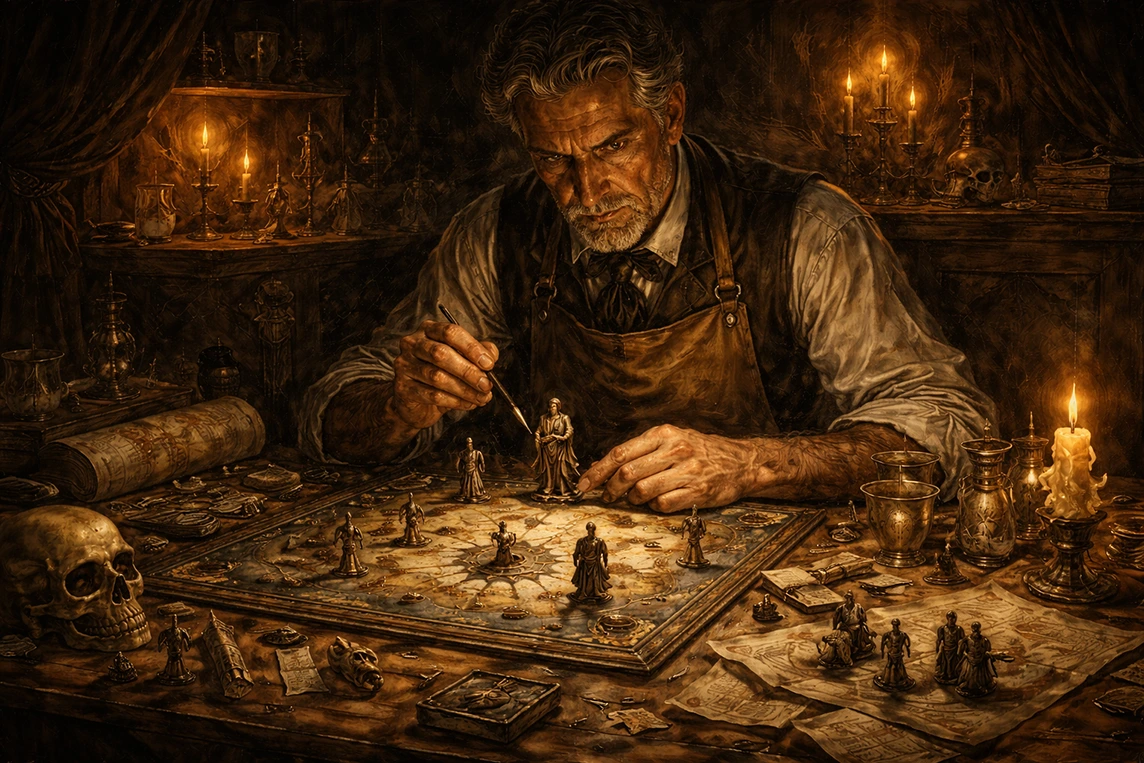
In Opus Mortis, every card, every clue, and every decision carries a specific narrative weight. The player does not progress by chance, but because their personal story within the game pushes them forward, reinforcing emotional engagement.
Design evolution: from rules to narrative in a board game
Contemporary designers understand that a solid narrative in a board game can support even seemingly simple mechanics. The key lies in coherence between story, rules, and emotional tone. When an action has narrative weight, players remember it as part of a larger story.
In Opus Mortis, narrative in a board game is directly embedded in the rules. Moral tension is not decorative but structural. An investigator may betray the group, a medium may lose their sanity, and a killer may hide behind a mask of virtue. Every mechanical decision has a narrative echo that builds meaning, generates immersion, and maintains constant tension.
The power of shared narrative in a board game
Unlike a novel or a film, narrative in a board game is neither linear nor closed. The story is built collectively by the players. This shared component is one of the greatest strengths of modern narrative design.
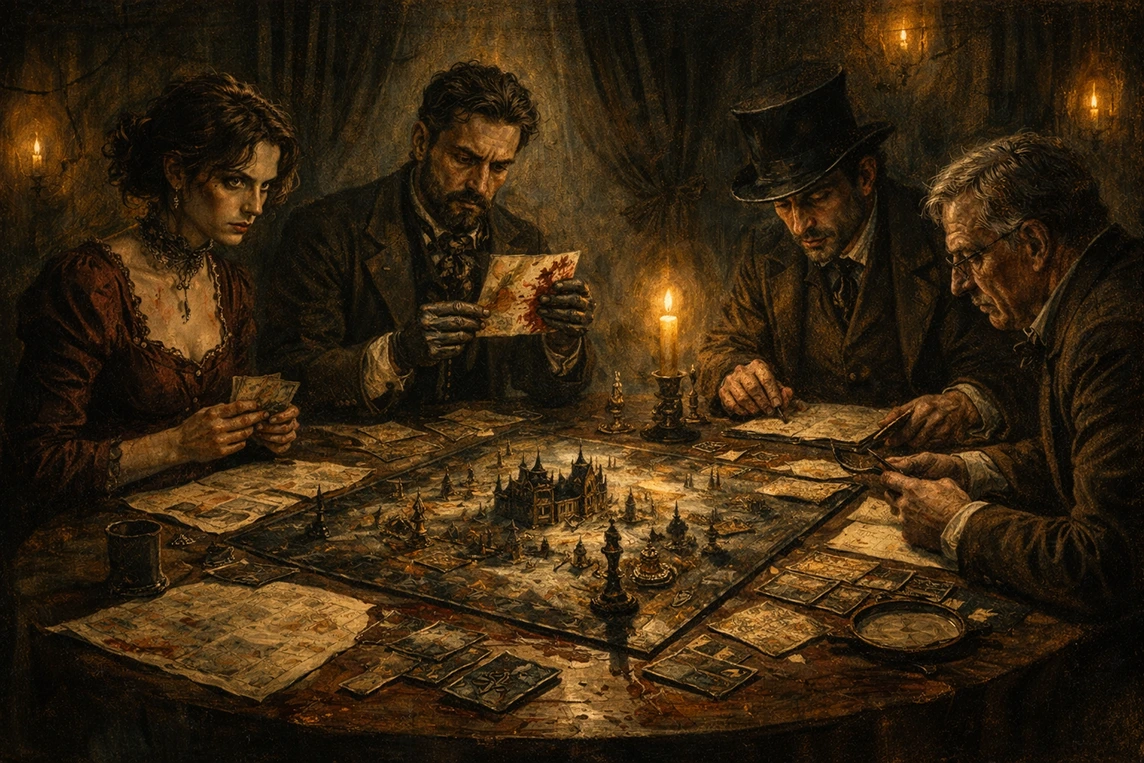
In Opus Mortis, no two sessions are the same because no two groups make the same decisions. Narrative in a board game is written in real time: alliances shift, trust breaks, and the game’s fictional city adapts to the emotions of those who inhabit it. This emergent narrative turns each session into a unique experience.
Opus Mortis and narrative in a board game driven by morality
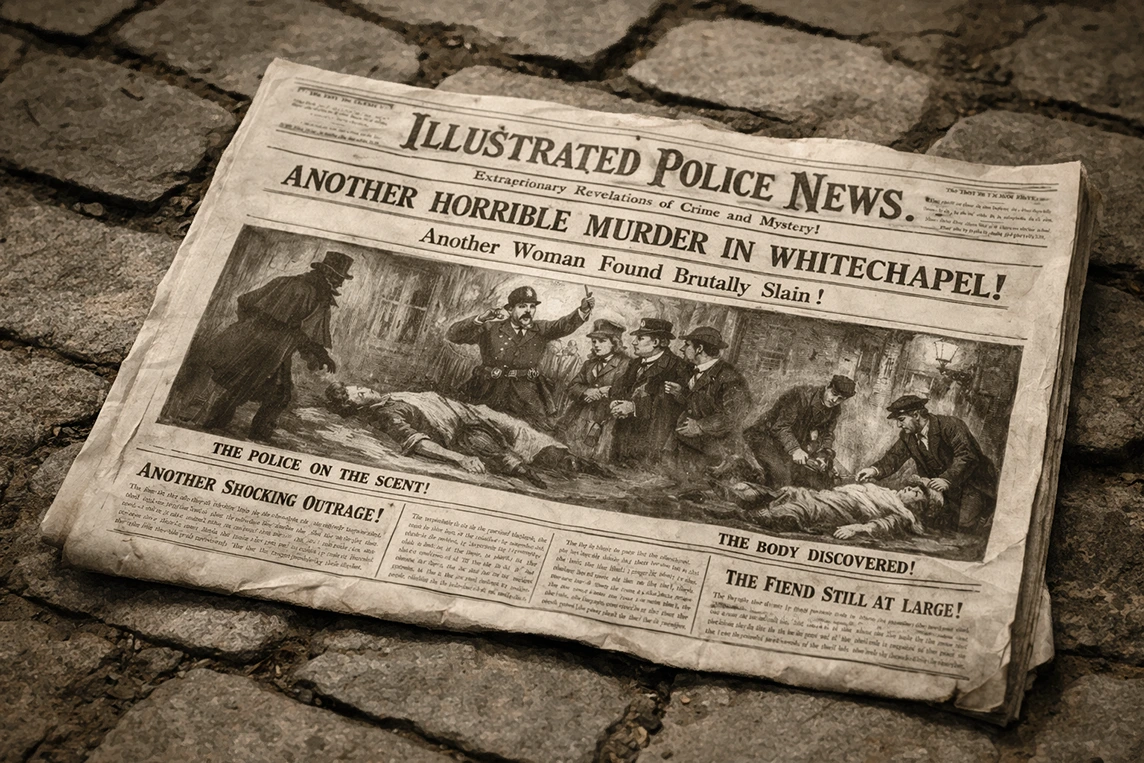
While other narrative games focus on mystery or adventure, Opus Mortis introduces a distinctive approach within narrative in a board game: guilt and morality. The story is not limited to discovering who the killer is, but to exploring why they acted and what consequences their actions will have for everyone involved.
“Each player must ask themselves whether they seek justice… or redemption.”
— Narrative designer of Opus Mortis
The result is an intense psychological experience where the boundary between hero and villain blurs. Narrative in a board game becomes an ethical mirror, forcing players to confront their own decisions.
Clear examples of narrative in a board game applied to design
Opus Mortis materializes its narrative approach through multiple design elements:
-
Fate cards that reflect the character’s inner motivations.
-
Dynamic events that introduce constant moral dilemmas.
-
Hidden roles that generate parallel stories of deceit and betrayal.
-
Branching scenarios where each outcome opens a new chapter.
Together, these elements build what the team defines as moral horror: the fear of discovering that our decisions, within narrative in a board game, reveal more about ourselves than the crime itself.
Immersion as the result of coherent narrative in a board game
The rise of narrative games shows that players seek to feel, not just to win. An effective narrative in a board game does not require excessive complexity, but emotional coherence and thematic consistency.
In Opus Mortis, the Victorian setting, literary language, and sustained tension turn each session into a story that could belong to a classic novel or a dark detective case. Every session leaves a mark: a post-game conversation, an unresolved suspicion, or an uncomfortable question that goes beyond the board.
Conclusion: narrative in a board game as the core of the experience
Narrative is not an accessory but the core that gives life to modern design. In Opus Mortis, story guides every decision and transforms the session into a fully immersive experience.
The player does not merely play a role but embodies it, facing moral and emotional dilemmas that persist beyond the game. Because in the end, components are stored away… but narrative in a board game remains in the memory of those who lived it.