Introduction
Fear takes many forms. Sometimes it hides in the shadows, other times behind a kind smile. Yet, at its core, all human fears follow patterns that have repeated themselves for centuries: the archetypes of fear Opus Mortis.
During the creation of Opus Mortis, our team sought to understand not only what frightens us, but why it does. From that search emerged characters and situations that explore universal fears: loss, guilt, punishment, madness, and the unknown that dwells within each of us. These archetypes of fear Opus Mortis are not simple narrative devices, but deep psychological structures that shape the entire gameplay experience.
“Fear is not a monster. It is a mirror reflecting a truth we do not want to face.”
— Opus Mortis Narrative Team
The Origin of Fear: A Universal Construction
From Greek myths to Victorian literature, fear has served as a moral and social instrument. It represents what each culture deems dangerous, forbidden, or unacceptable. Monsters are never random creations; they are reflections of the era that gives birth to them.
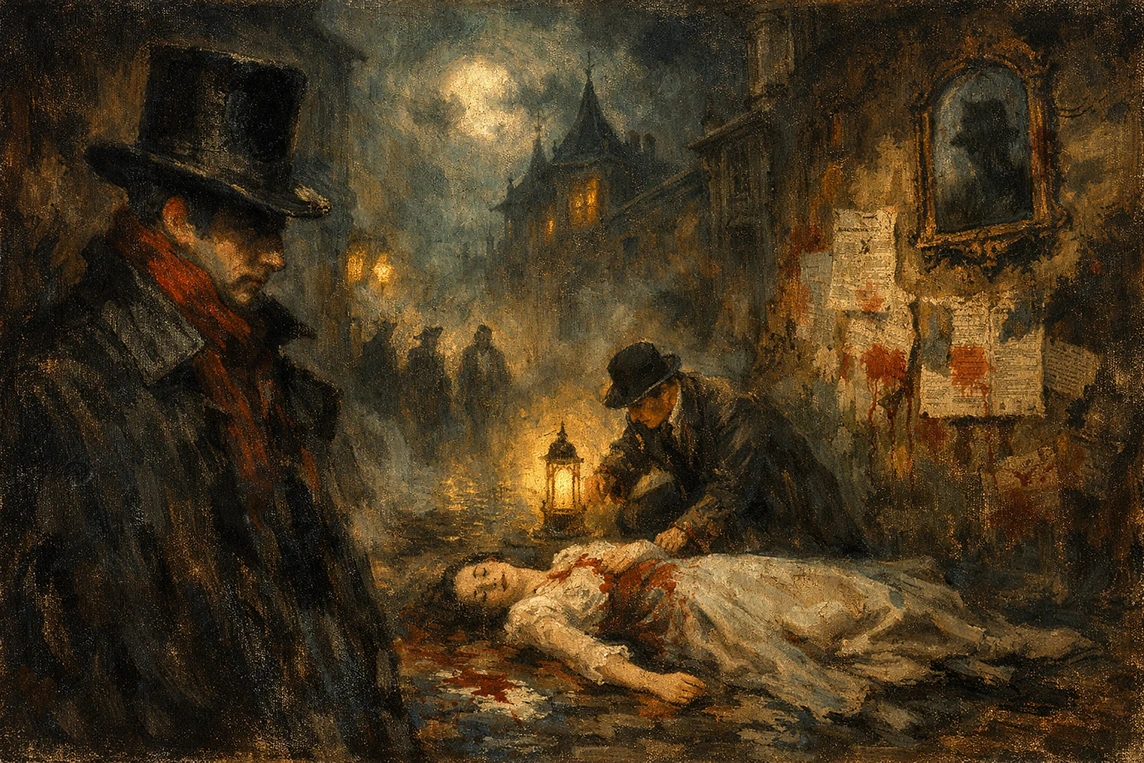
In the Victorian age—the primary setting for the archetypes of fear Opus Mortis—terror was linked to moral decay, the loss of faith, and the rise of science challenging divine authority. Fear became a warning, a mechanism of social and spiritual control.
The archetypes born from this context still resonate today: the scholar corrupted by ambition, the innocent dragged into sin, or the victim who eventually becomes an executioner. These figures form the conceptual foundation of the Opus Mortis universe.
The Archetypes of Fear Opus Mortis: Between Reality and Symbolism
In Opus Mortis, every character and killer embodies an archetype of psychological terror. They are neither simple villains nor heroes, but manifestations of deeply human emotions. These archetypes of fear Opus Mortis act as catalysts for moral and narrative conflict.
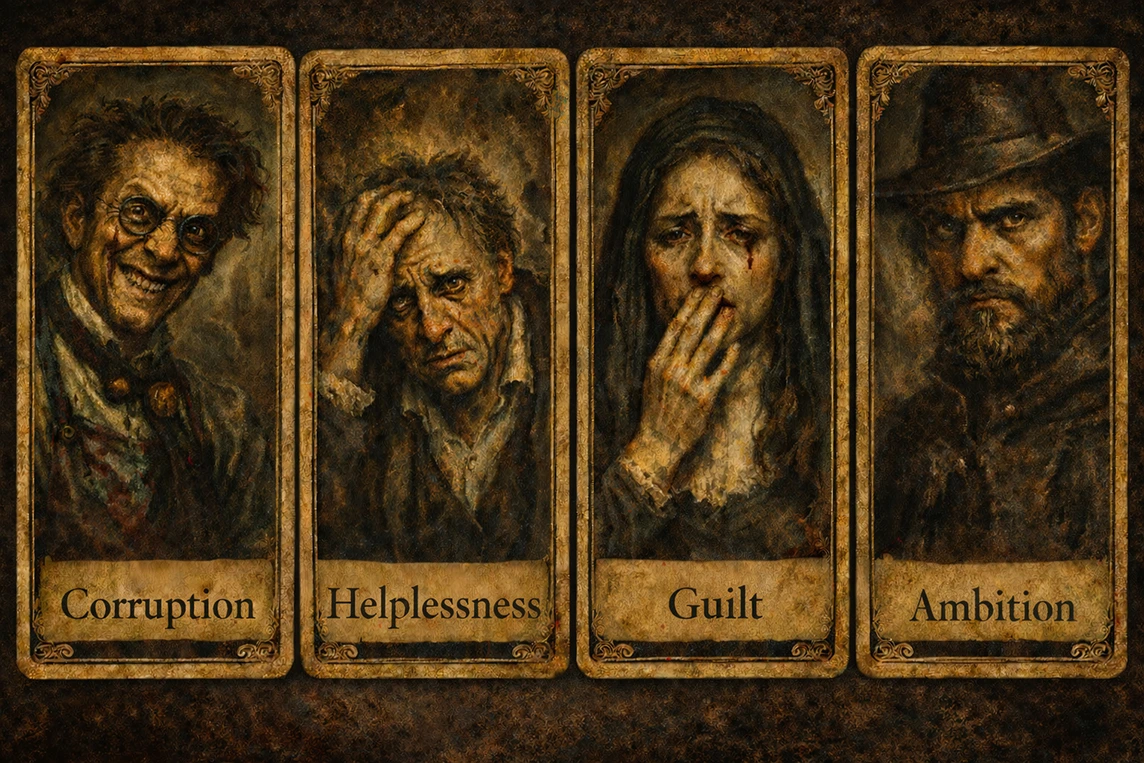
The Corrupted Creator
Inspired by the myth of Frankenstein, this archetype symbolizes the fear of limitless ambition. It seeks dominion over life and death, only to be consumed by its own desire for control.
In Opus Mortis, this fear takes shape through figures such as the Surgeon of Thornhollow, the Sculptor of Corpses, the Vial Murderess, and the Borrowed Man. Each represents the terror of crossing a boundary that should never be crossed.
The Helpless Witness
The horror of knowing too much.
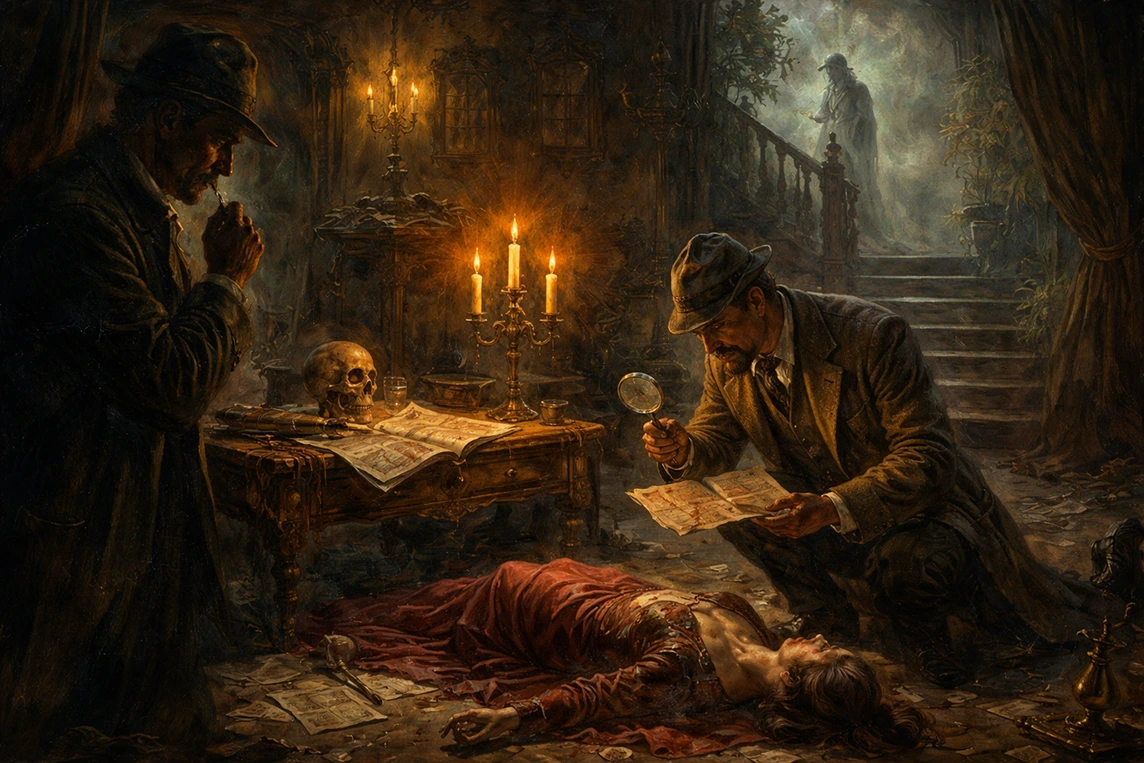
This archetype represents those who uncover the truth but cannot act without unbearable consequences. Investigators with traumatic pasts, characters burdened with secrets they cannot reveal, and figures trapped between guilt and silence all embody this fear.
Within the archetypes of fear Opus Mortis, the question posed by the Helpless Witness is devastating: what happens when understanding something means condemning oneself?
The Guilty Victim
The fear of having participated—through action or omission—in evil.
This archetype embodies collective guilt and the idea that no one is entirely innocent. Investigators with histories of betrayal, decisive mistakes, or moral failure carry a past that haunts them throughout the game.
In the Opus Mortis universe, even the innocent bear shadows. The Guilty Victim reinforces one of the most unsettling archetypes of fear Opus Mortis: shared moral responsibility.
The Dark Redeemer
This archetype represents the moral executioner who punishes sin through violence. It combines fanaticism and redemption: killing to purify, destroying to save. Figures such as the White Redeemer or the Crossroads Executioner force players into extreme ethical dilemmas.
Among the archetypes of fear Opus Mortis, this profile raises a disturbing question: is evil a punishment, or a distorted form of justice?
The Mimic
Rooted in the modern fear of losing identity, the Mimic symbolizes the dissolution of the self. It longs to become someone else, to assume another life, to escape the emptiness within. Often unnoticed, it can deceive even the most attentive players.
Its greatest weapon is not deception, but reflection. Within the archetypes of fear Opus Mortis, the Imitator reminds us that the deepest terror lies in not knowing who we truly are.
Fear as a Narrative Tool in Opus Mortis
The narrative design of Opus Mortis does not rely on jump scares or visible monsters. Terror emerges from inner conflict. Each of the archetypes of fear Opus Mortis compels players to confront their own fears and act accordingly.
Game mechanics reinforce this psychological approach:
-
Investigators face personal moral dilemmas.
-
Clues uncover uncomfortable truths.
-
Endings leave ethical questions unresolved.
In this way, fear becomes a language, and each session becomes an exploration of human nature.
Victorian Archetypes: Between Science and Faith
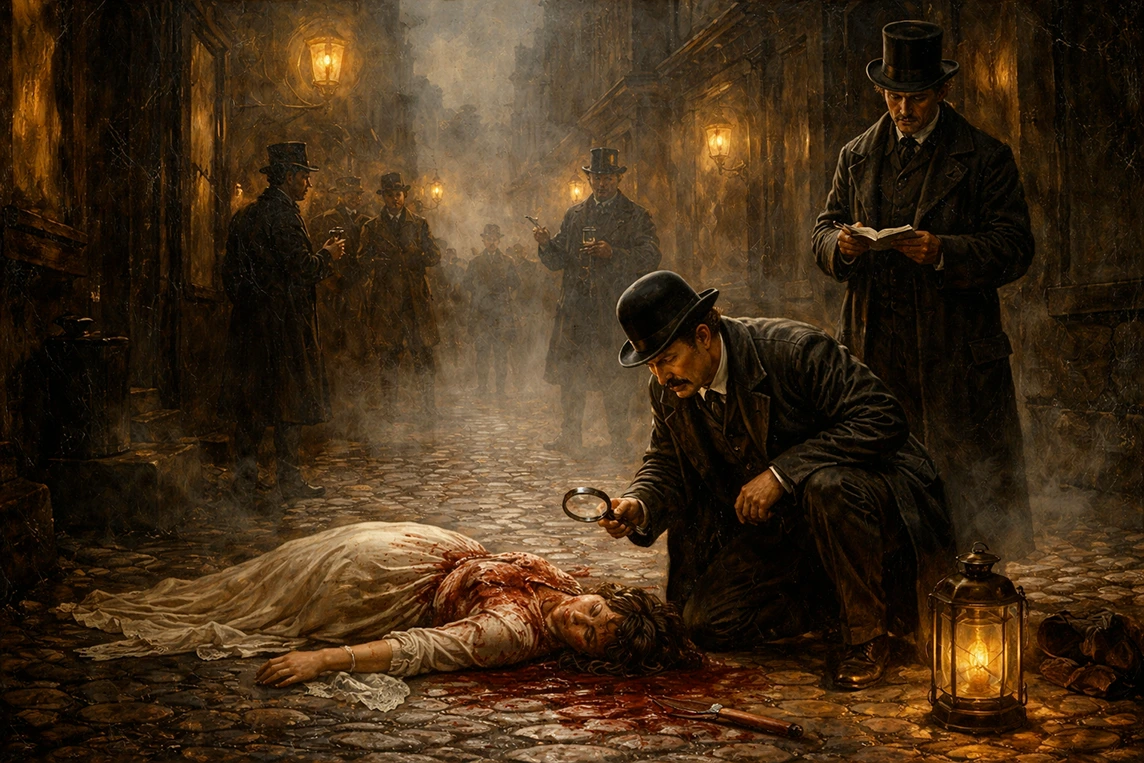
The universe of the archetypes of fear Opus Mortis is shaped by tensions intrinsic to the Victorian era: religion versus reason, purity versus desire, progress versus divine punishment. Every story reflects this clash between the visible and the invisible.
Alienists, mediums, and priests do not merely represent professions, but opposing belief systems. All seek different answers to the same fundamental question: can the soul be redeemed?
“In the London of Opus Mortis, the fog does not hide monsters… it disguises them.”
— Project Art Director
Conclusion: The Archetypes of Fear Opus Mortis as a Mirror of the Soul
The archetypes of fear Opus Mortis endure because they allow us to recognize what we deny within ourselves. In this universe, fear takes shape, sits at the table, and participates in every decision.
The board becomes a mirror, and each game a confession. Understanding these archetypes does not mean defeating them, but accepting them. Because, ultimately, true terror is not the unknown, but the familiar made strange.