Introduction
Few subjects provoke as much curiosity and repulsion as serial killers. The interest in serial killers transcends eras, cultures, and media formats, remaining a persistent phenomenon in modern society. These figures exist between myth and horror, fascination and fear. From Victorian crime pamphlets to contemporary documentaries, humanity has shown a lasting attraction to those who cross the most extreme moral boundaries.
But why does evil captivate us so deeply when it takes human form? What lies behind a gaze that not only terrifies but also hypnotizes? The interest in serial killers does not stem solely from violence itself, but from a collective attempt to understand what threatens psychological and social order.
The Psychological Roots of Interest in Evil
The Need to Understand the Incomprehensible
From Freud to Jung, the human mind has sought to explain destructive impulses. Serial killers embody internal chaos, a threat that is not supernatural but profoundly human. The interest in serial killers largely arises from the need to impose structure and explanation on what appears irrational.
By observing them, we attempt to understand what we fear we might be capable of. Analyzing patterns, motivations, and rituals becomes a way to draw a boundary between “them” and “us,” reinforcing the illusion of control over evil.
The Dark Mirror of Empathy
Paradoxically, empathy plays a role. Learning about a killer’s childhood, trauma, or psychological background can be strangely comforting: it suggests that evil can be explained, that it follows a logic. This search for meaning within horror is what transforms fear into fascination.
In this sense, the interest in serial killers acts as a psychological defense mechanism—if we understand the causes, we believe the threat becomes manageable.
The Culture of the Killer: From Myth to Spectacle
Jack the Ripper and the Birth of the Modern Serial Killer
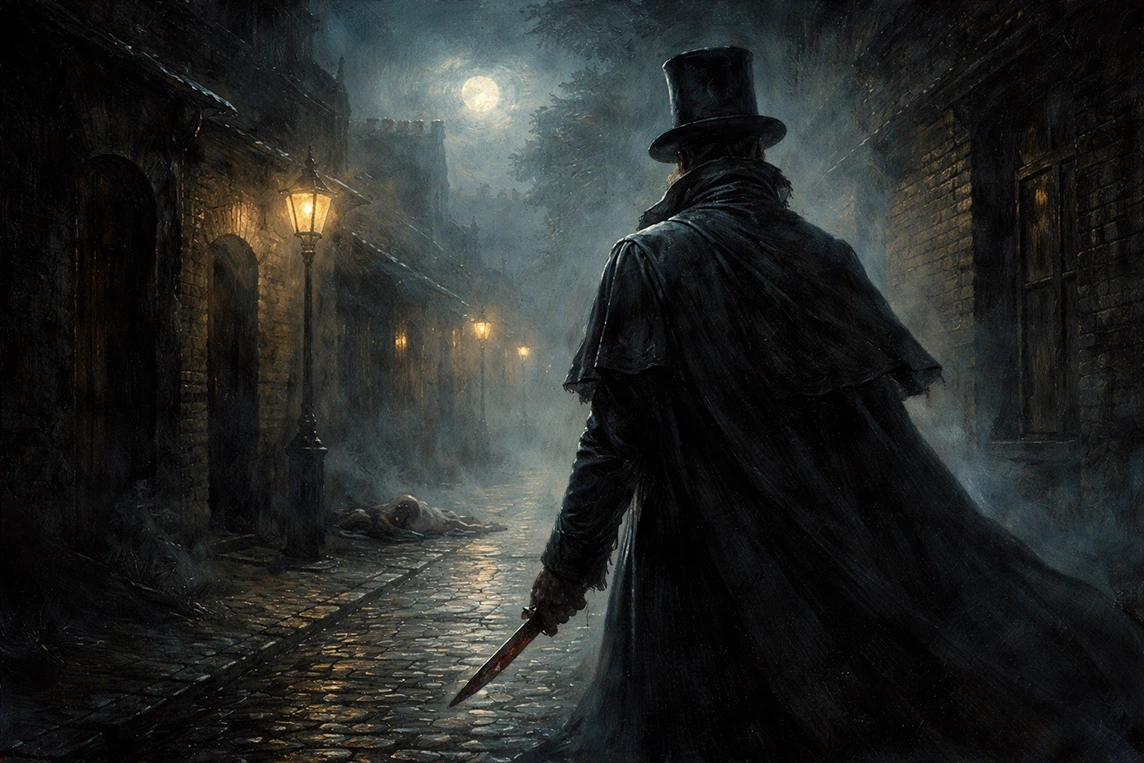
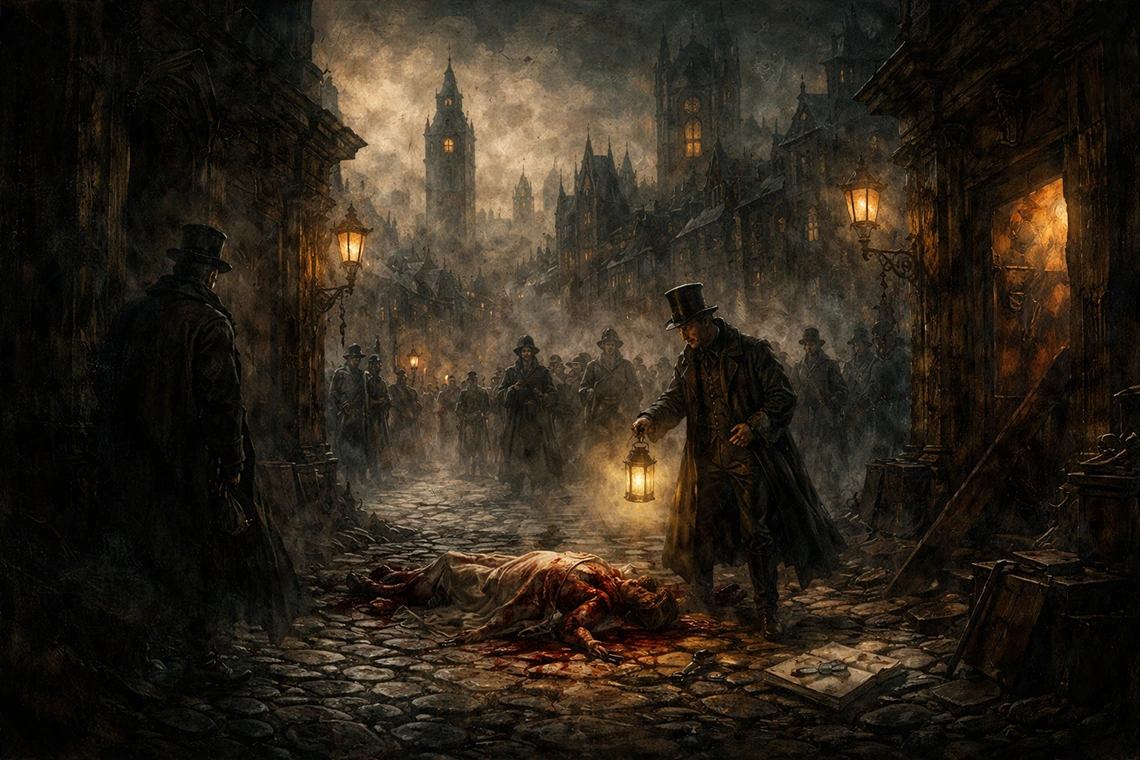
The nineteenth century gave rise to the first truly media-driven serial killer. Sensationalist British newspapers transformed Jack the Ripper into a cultural icon. His anonymity made him immortal: faceless and unnamed, he became a universal symbol of fear and laid the foundation for the modern interest in serial killers.
This moment marked the transition of the killer from criminal to myth.
From Newspapers to Screens
The twentieth century carried this fascination into mass culture. Films, television series, and novels turned violence into a symbolic language. The interest in serial killers adapted seamlessly to cinema, television, and later to streaming platforms.
We do not observe the killer to admire them, but to domesticate fear—transforming it into narrative, fiction, and something we can switch off at the end of the day.
What Attracts Us to Danger
The Power of the Forbidden
Human beings have always been drawn to what frightens them. Stories about serial killers offer a safe way to explore the abyss. The interest in serial killers allows us to experience danger and transgression from a controlled distance, without real-world consequences.
Moral violation, when observed safely, becomes narratively compelling.
The Mind as a Stage for Suspense
The true fascination lies not in the crime itself, but in the mental process that precedes it. We are intrigued by how human consciousness can become distorted enough to justify extreme acts. In this way, the killer becomes a warped mirror of rational thought.
The Appeal of Criminal Narratives
The Killer as Narrator
In many narratives, the serial killer is not only the protagonist but also the storyteller. The audience is guided through a distorted logic and worldview. The interest in serial killers intensifies when lucidity coexists with madness.
Tension emerges from understanding motives without ever morally accepting them.
From Horror to Sociological Study
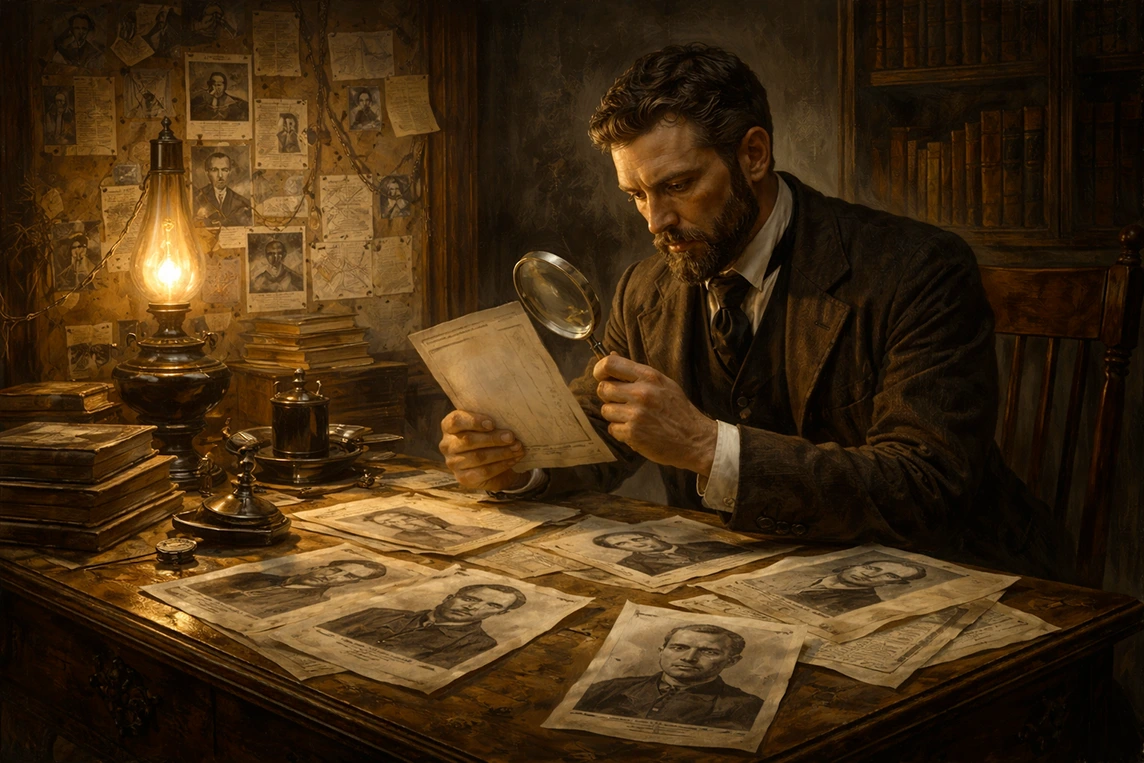
The rise of true crime has transformed morbid curiosity into structured analysis. Criminology, forensic psychology, and narrative journalism have professionalized the study of evil. Through these disciplines, the interest in serial killers shifts from sensationalism to knowledge.
Between Morality and Spectacle
The Risk of Trivialization
Fascination carries danger. When serial killers become charismatic figures, the suffering of victims fades into the background. Consumer culture has turned crime into entertainment, distorting the interest in serial killers and stripping it of ethical context.
“The interest in the killer reveals more about the observer than about the one who kills.” — fragment attributed to Cesare Lombroso.
Balancing Understanding and Glorification
The challenge lies in understanding without justifying, analyzing without idolizing. Studying serial killers should never be an act of admiration, but a means of identifying the social and psychological mechanisms that enable such crimes.
The Serial Killer as a Symbol of the Modern Era
Extreme Individualism
The serial killer embodies the collapse of empathy and the breakdown of social bonds. They represent the most extreme reflection of a society that glorifies individualism and control. This is why the interest in serial killers feels profoundly contemporary, even in societies that consider themselves civilized.
Evil as a Universal Narrative
Ultimately, the interest in serial killers is not merely morbid curiosity—it is an attempt to understand the persistence of evil in a world that prides itself on progress. Every case, every story, reopens the same question: can humanity eradicate what may be part of its own nature?
Conclusion
Serial killers fascinate us because they are the abyss with a human face. The interest in serial killers stems from a deep need to understand what challenges our sense of safety, morality, and identity.
We do not observe them for what they do, but for what they reveal: that the boundary between sanity and horror can be as thin as a shadow in the fog—and that understanding evil is, in part, a way of protecting ourselves from it.