Introduction
The decision to set Opus Mortis in the Victorian era was not an aesthetic choice, nor a way to simply “add atmosphere” to the game. It was a direct consequence of the type of story and experience we wanted to create.
From the very beginning, we were interested in treating crime not as an isolated event, but as a social, moral, and human phenomenon. To do that, we needed a historical context in which fear, inequality, and the fragility of order were visibly intertwined.
The Victorian era offered exactly that balance.
An Era of Progress and Contradictions
The nineteenth century was a period of major scientific, technological, and social advances. At the same time, it was marked by extreme inequality, urban overcrowding, and harsh living conditions for large segments of the population.
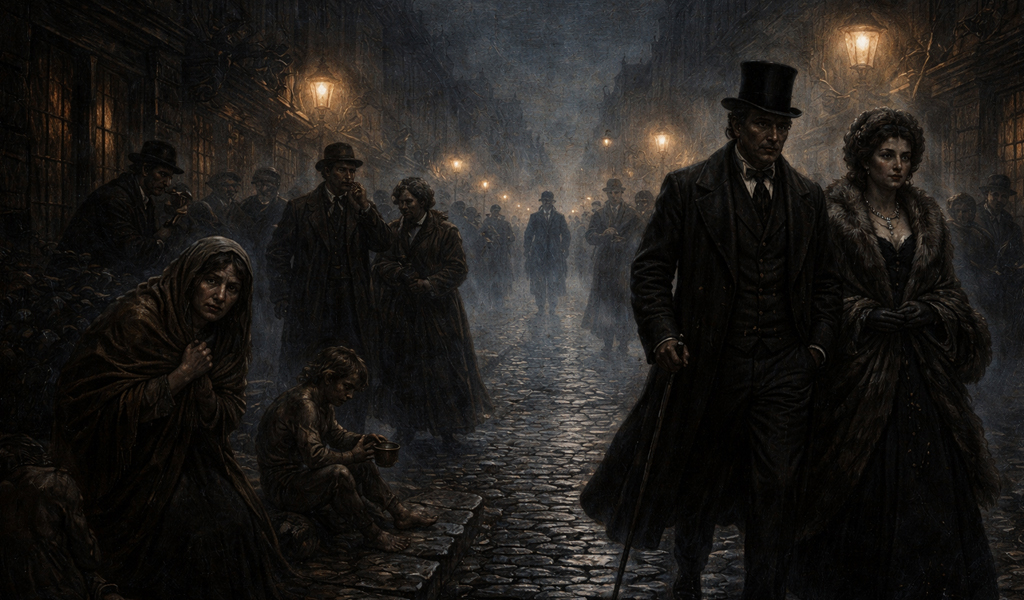
This contrast was especially compelling from a narrative perspective. Beneath an appearance of order, morality, and progress, fear, misery, and violence coexisted. That underlying tension aligns closely with the kind of stories we wanted to tell in Opus Mortis.
The respectable city and the dark city were not separate worlds, but realities existing side by side.
The Birth of the Serial Killer and Modern Investigation
The Victorian era coincides with the emergence of the modern concept of the serial killer and with the first systematic attempts at criminal investigation. Criminology and criminal psychology begin to take shape, still in very rudimentary forms, while police forces lack many of the tools we now take for granted.
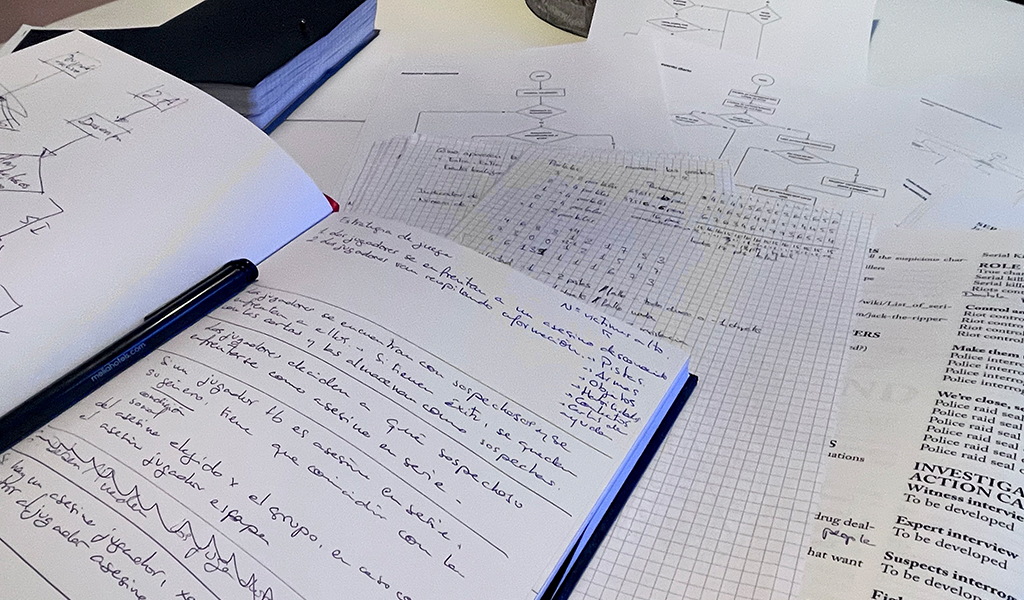
This context allows investigation in Opus Mortis to rely more on observation, deduction, and interpretation than on advanced scientific procedures. Mistakes, false assumptions, and rushed decisions are a natural part of the process—just as they were in reality at the time.
Uncertainty is not a flaw of the system. It is part of the system.
The City as a Moral Reflection
The Victorian city is not merely a backdrop. It functions as a reflection of the society that inhabits it. Wealthy and impoverished neighbourhoods exist within walking distance of each other, social classes rarely mix, and social control is both strict and fragile.
This environment makes it possible to treat crime not as an exceptional anomaly, but as a symptom of a social system filled with tension and contradiction. For us, it was important that the board represented this complex structure, rather than serving as a set of purely functional locations.
Each space carries narrative and moral weight, not just mechanical purpose.
Coherence with the Tone of the Game
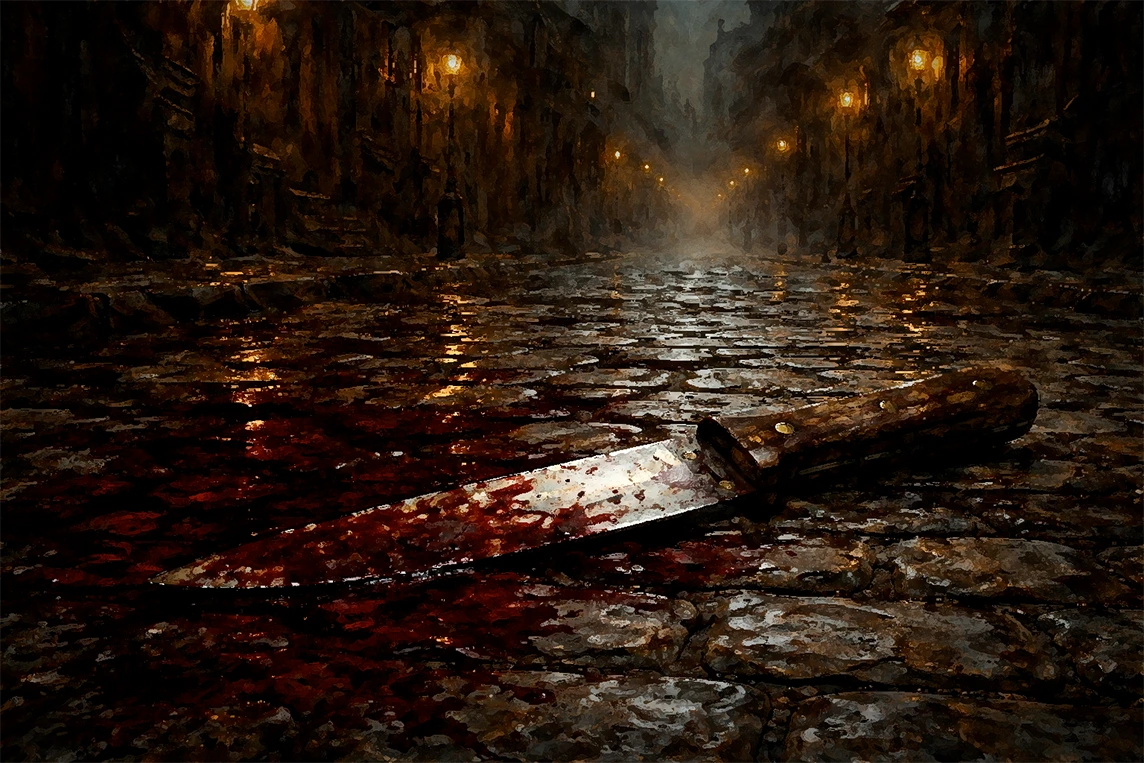
Choosing the Victorian era is also directly connected to the ethical boundaries and narrative tone we defined for Opus Mortis. It is a context that allows us to work with suggestion, fear, and moral discomfort without resorting to explicit depiction.
We are not trying to recreate specific historical events. Instead, we use this framework to build a universe that is coherent with the gameplay experience: slow investigation, incomplete information, and decisions that carry lasting consequences.
The Victorian era does not decorate the story of Opus Mortis. It supports it.