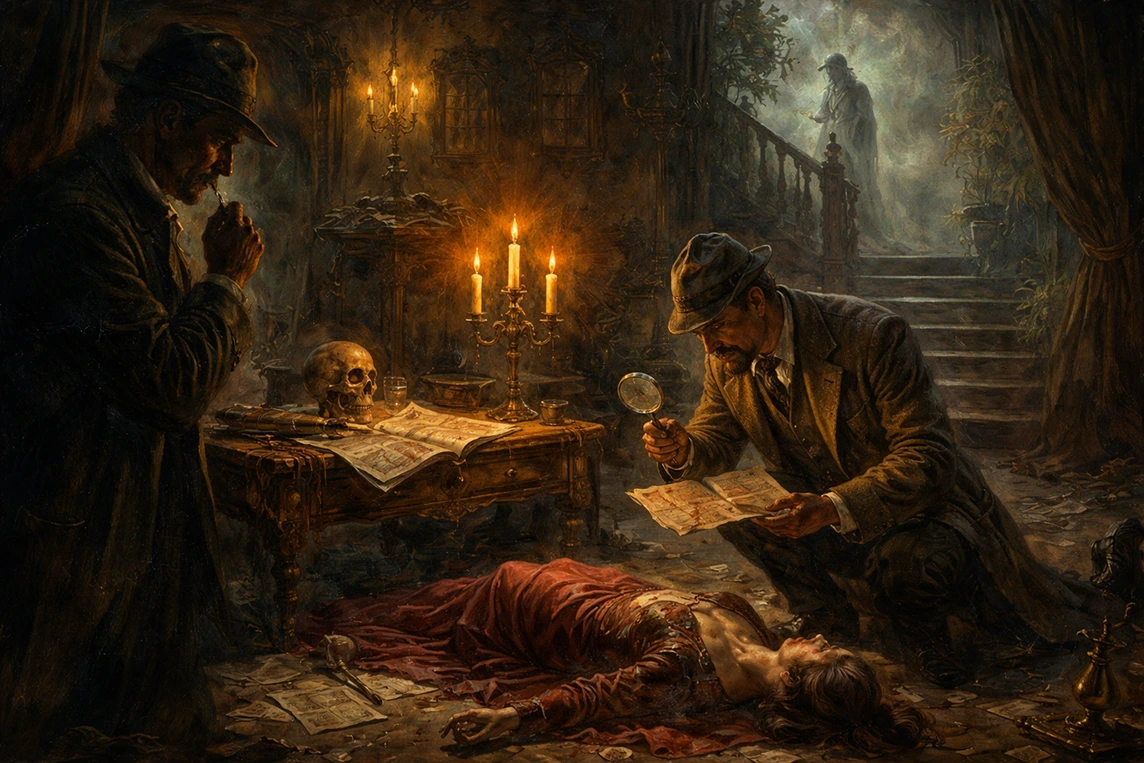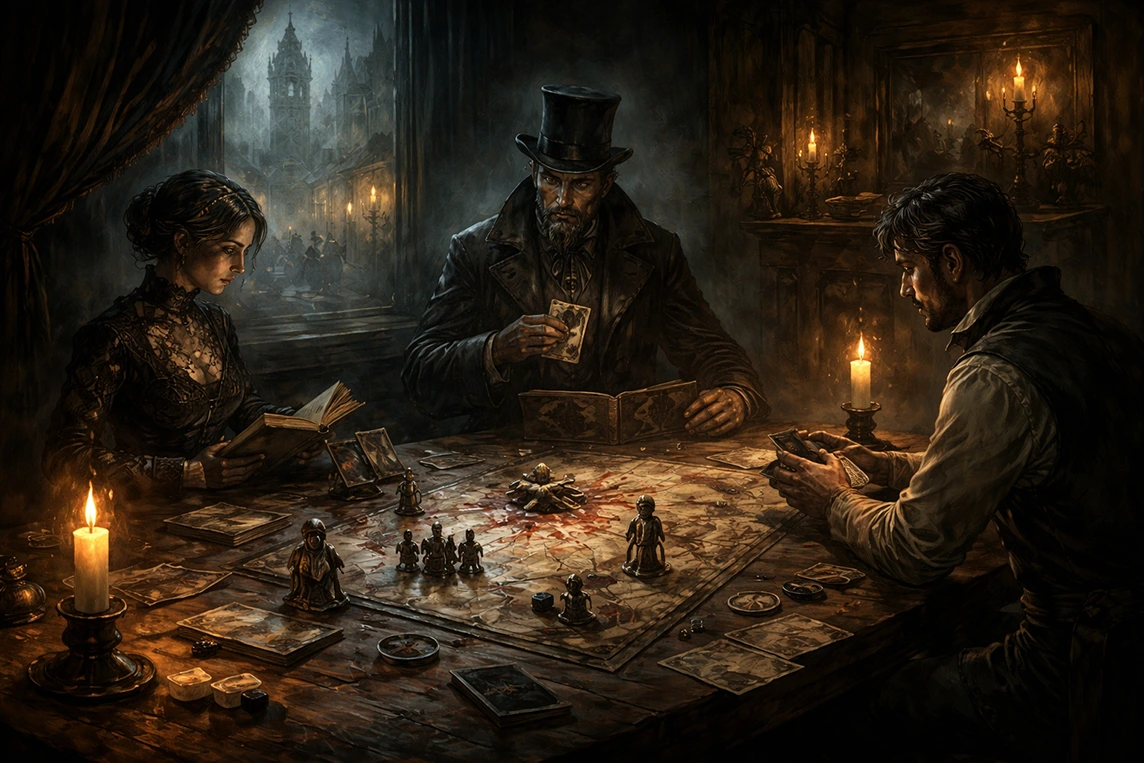
The inspiration board game Opus Mortis was born in 2014 from the need to create a tabletop experience focused on the figure of the serial killer and criminal investigation that went far beyond traditional deduction games. From the very beginning, the objective was clear: to deliver a narrative, psychological, and morally complex board game in which every session would become a different story, and where player decisions would carry real and lasting consequences.
From its earliest sketches, the inspiration board game Opus Mortis sought to break away from the monotony of flat and repetitive mechanics. Rather than limiting players to solving a closed puzzle, the design embraced a shifting narrative built on suspicion, ethical choices, and consequences. Each session presents a different conflict, reinforcing uncertainty, tension, and psychological depth at the core of the experience.
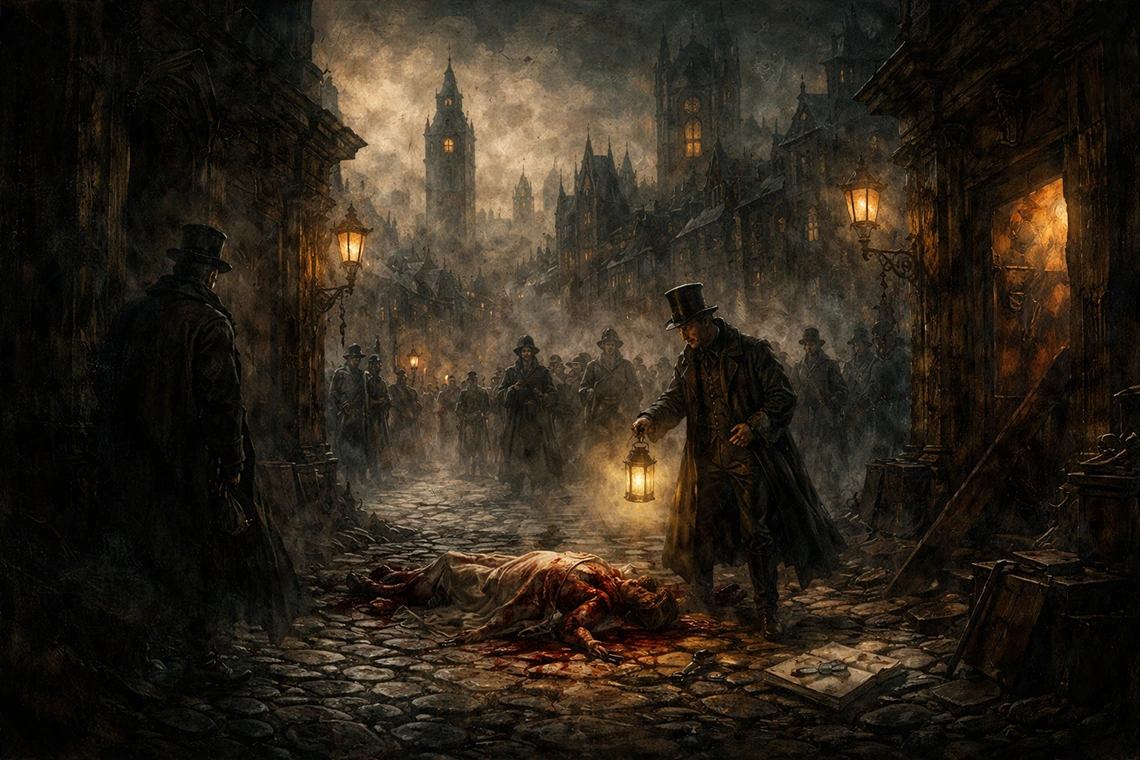
The fascination with Jack the Ripper and the myth surrounding his identity served as the conceptual starting point. Although he was not the most prolific killer in history, his legacy has endured for over a century. His case marked the birth of modern interest in true crime, psychological analysis of criminal behavior, and the moral duality between justice, guilt, and punishment—elements that are fundamental to the inspiration board game Opus Mortis.
At the same time, the nineteenth century witnessed the emergence of criminology and criminal psychology. Figures such as Cesare Lombroso attempted to explain criminal behavior through physical and mental traits. This scientific context, combined with the splendor and decay of the Victorian era, shaped the narrative universe of Opus Mortis: a world where reason and faith, light and darkness, coexist in constant tension.
From Victorian Intrigue to the Gaming Table
London as a Moral Mirror of the 19th Century
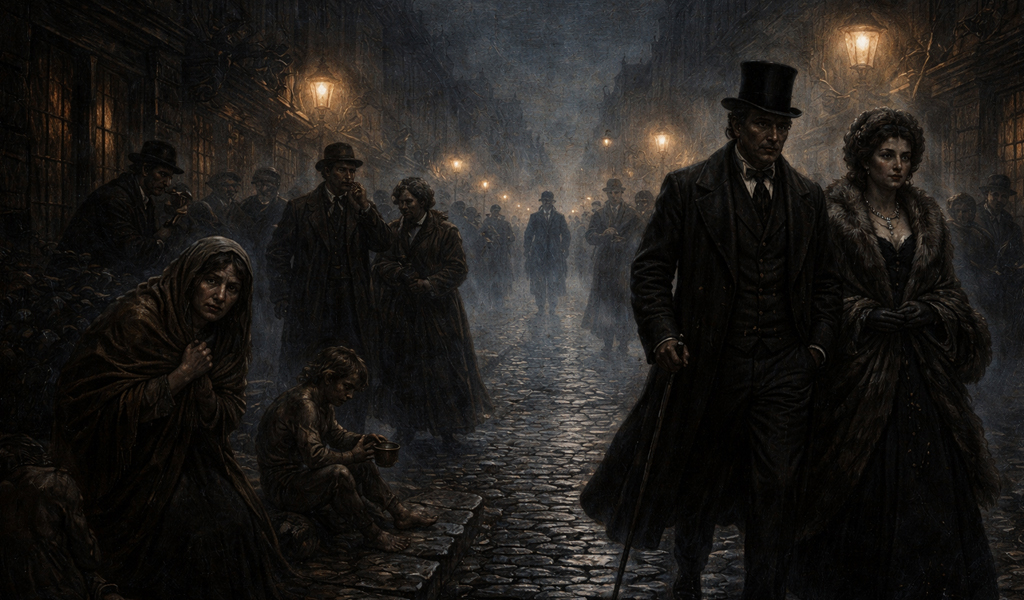
At the heart of the inspiration board game Opus Mortis lies a nameless city clearly inspired by Victorian London. Shrouded in fog, gaslight, and secrets, the city functions not merely as a setting but as a living character. Every alley reflects the struggle between good and evil, and every district exposes the moral contradictions of the era.
Aristocratic mansions, working-class neighborhoods, and shadowy backstreets portray a deeply fragmented society. Morality dissolves among wet cobblestones and respectable façades, while collective fears remain hidden beneath the illusion of social order.
Crime as a Reflection of Society
Opus Mortis understands crime as the symptom of a broken social system. Drawing inspiration from the literary tradition of Charles Dickens and Wilkie Collins, the game exposes inequality, moral hypocrisy, and despair in an era where justice was fragile and faith was often an empty promise. This social perspective is a cornerstone of the inspiration board game Opus Mortis.
Literary and Artistic Sources of Inspiration
Dickens, Poe, and the Shadow of Conscience
The narrative structure of the game draws heavily from Dickens’ moral storytelling, where every plot contains an ethical reflection. This tone is blended with the influence of Edgar Allan Poe, evident in the psychological tension, narrative pacing, and exploration of obsessive minds. Both authors directly shape the atmosphere and narrative focus of the inspiration board game Opus Mortis.
Shelley and Stevenson: The Creator and the Monster
From Mary Shelley and Robert Louis Stevenson comes the exploration of duality, creation, and sin. Each killer in Opus Mortis embodies a specific philosophical idea—revenge, purity, redemption, or knowledge—while investigators act as moral mirrors, confronting the same internal contradictions.
Visual Influences: Doré and Goya
The inspiration board game Opus Mortis also manifests visually. The engravings of Gustave Doré and the works of Francisco de Goya influence the use of chiaroscuro, dense compositions, and extreme contrasts of light. These elements reinforce the conflict between morality and sin, consolidating an aesthetic rooted in psychological horror.
The Birth of Modern Investigation
From Lombroso to Scientific Deduction
The nineteenth century became a laboratory for criminal thought. Opus Mortis reflects the fascination with early forensic science, methodical observation, and pattern recognition. Lombroso, Bertillon, and Galton marked the beginning of empirical criminology and form part of the conceptual background of the inspiration board game Opus Mortis.
The Investigator Figure: Reason Versus Chaos
Players embody investigators from diverse backgrounds—alienists, journalists, priests, or mediums—each facing the same dilemma: understanding the killer’s mind without losing their own sanity. This conflict between reason and madness defines the central tension of the inspiration board game Opus Mortis.
“During the development of Opus Mortis, we realized that true horror was not in the crime itself, but in the mind that justifies it.”
— Opus Mortis Design Team
Game Philosophy: Morality as a Battlefield
Hidden Roles and Ethical Decisions
Every session becomes a dissection of human morality. The hidden-role system forces players to suspect, lie, and deduce, as the killer may be among them. Trust becomes a resource that is both essential and dangerous.
Collective Victory or Individual Redemption
In Opus Mortis, there are two paths: stop the killer and save the city, or pursue personal objectives even at the group’s expense. This duality transforms the mechanics into a moral metaphor where the common good and selfish ambition constantly collide.
A Shared Narrative Universe
Stories Between Light and Shadow
Each character features a personal story of approximately 400 words, written in the present tense with a moralizing tone. The city acts as a collective conscience, punishing and redeeming in equal measure. Killers have three possible endings—captured, killed, or escaped—reinforcing the narrative depth of the inspiration board game Opus Mortis.
Symbolism as the Language of Fear
Rain purifies or condemns; fog conceals the truth. The gothic atmosphere avoids cheap scares, instead cultivating a constant sense of guilt and moral consequence. The board itself becomes a mirror of the player’s conscience.
From Concept to Reality: The Creation of Opus Mortis
A Handcrafted Process
Since 2014, the project has evolved through historical research, narrative design, and cooperative mechanics development. Every element—from typography to trailer sound design—has been crafted to maintain absolute coherence with the Victorian universe.
Kickstarter: The Next Step
The Kickstarter launch represents the meeting point between art, narrative, and community. The goal is to unite players seeking more than a board game: an immersive psychological suspense experience where the story is actively played.
Conclusion: Inspiration Board Game Opus Mortis and the Fragility of the Human Mind
The inspiration board game Opus Mortis is not centered on murder, but on the fragility of human morality. Through art, literature, and psychology, the game pays tribute to the era that witnessed the birth of modern criminology and to the ghosts that still inhabit our decisions.
In every session, players confront not only the killer, but themselves.