Opus Mortis board game: introduction
Opus Mortis board game is a narrative project designed to explore psychological horror from a deeply human, moral and emotional perspective.
Introduction
At the heart of Opus Mortis lies more than a simple mystery: an emotional experience that blends psychological horror, cooperative investigation and immersive narrative.
During the development of the opus mortis board game, our team sought to create a living story capable of testing the minds and moral boundaries of those who gather around the table.
In this article, we explain what makes the opus mortis board game unique, how it is played, what emotions it generates and why it has become the most ambitious project we have created to date.
The experience in Opus Mortis board game: immersive narrative and psychological suspense
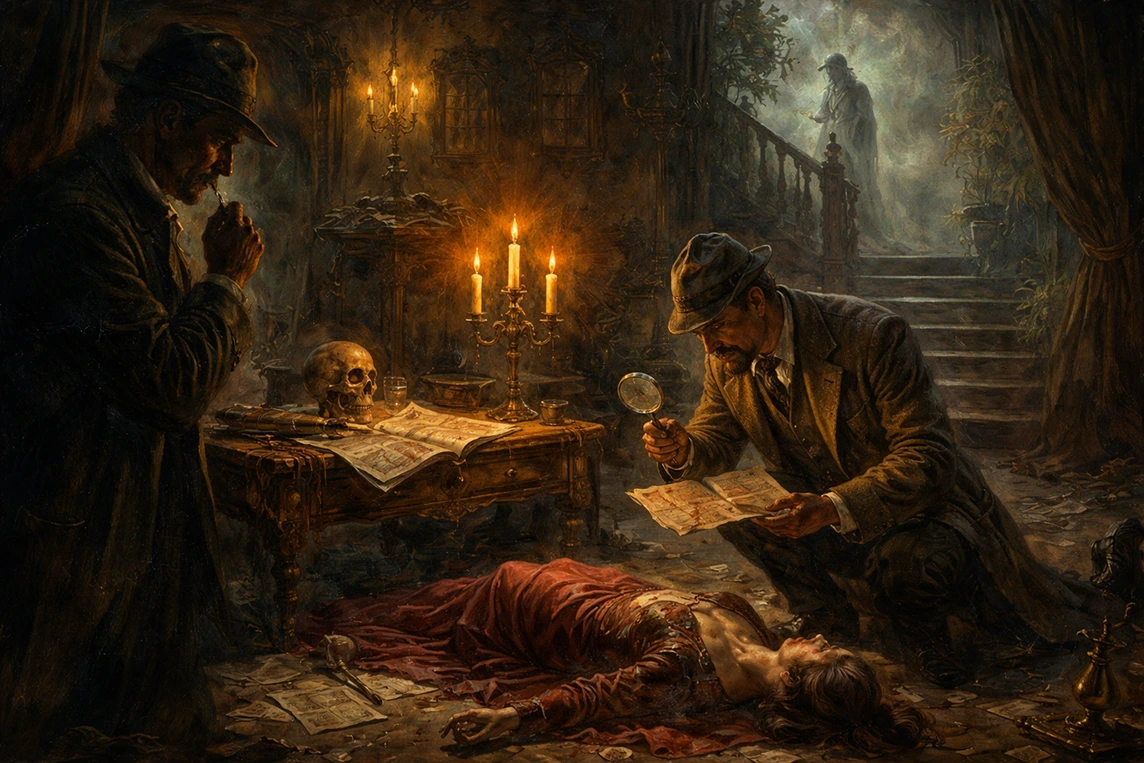
In Opus Mortis, each session becomes a story written in real time. Players take on the roles of investigators tasked with solving a series of murders, but soon discover that the truth does not always bring relief—sometimes, it condemns.
In the opus mortis board game, suspense is not driven by jump scares, but by sustained psychological tension.
Every silence, every glance and every decision weaves a growing network of suspicion and secrets.
“True fear does not come from the monster, but from what we are capable of when no one is watching.”
— Opus Mortis narrative team
Moral decisions in Opus Mortis board game
The mechanics of Opus Mortis are designed to force players into ethical dilemmas:
Should you accuse without proof, or protect someone who might be guilty?
In the opus mortis board game, every session can end differently, depending on the players’ empathy, logic or desperation.
Cooperation under suspicion in Opus Mortis board game: the core mechanic
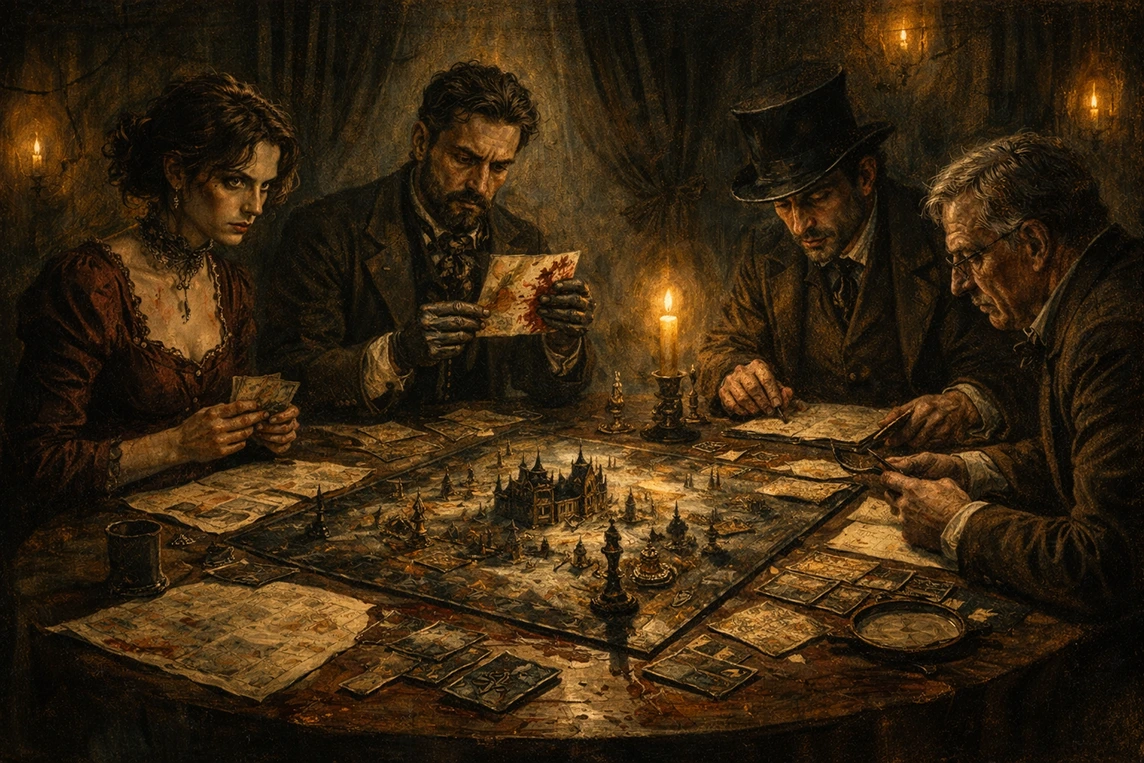
The game is defined as a cooperative investigation experience—but with a twist: no one knows who to trust.
In the opus mortis board game, players must work together to reconstruct events, analyze clues and deduce the murderer’s identity, while never having access to complete information.
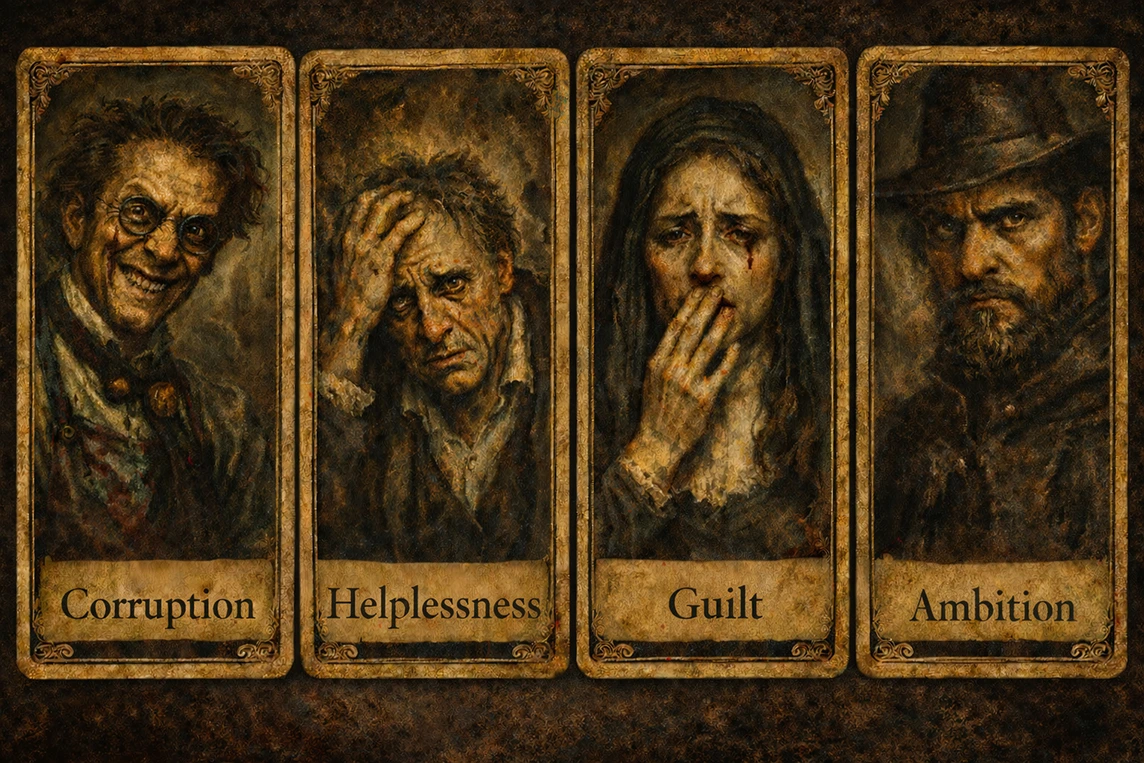
Some characters hide their intentions, while others guard secrets that could shatter group trust.
Each session of the opus mortis board game combines three distinct gameplay layers:
-
Logical deduction – analyzing clues and testimonies.
-
Social interaction – interpreting the intentions of other players.
-
Psychological tension – deciding how far to go to solve the case.
Replayability is extremely high: cards, events and narrative decisions ensure that no two sessions of the opus mortis board game are ever the same.
Victorian mystery in Opus Mortis board game: atmosphere as a protagonist
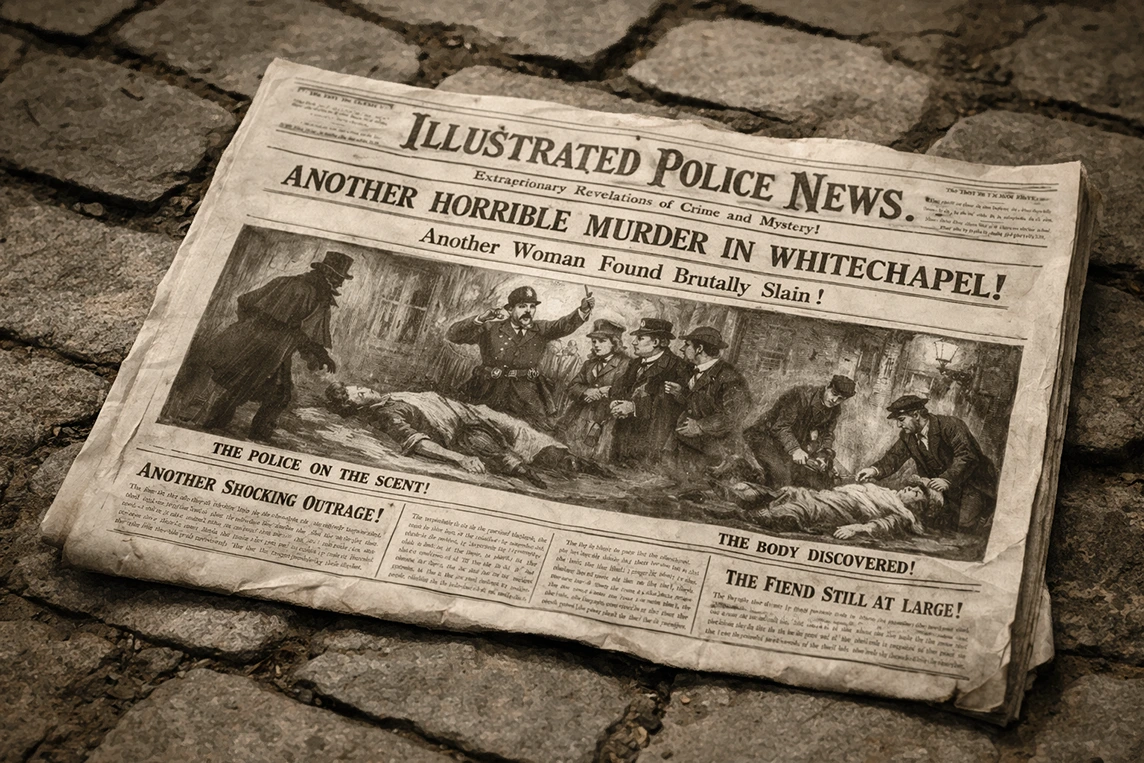
The setting of Opus Mortis transports players to late-19th-century London, where industrial smoke blends with superstition and whispered fears.
In the opus mortis board game, every component—from cards to scenarios—has been designed with a gothic, realistic aesthetic that reinforces the feeling of living inside a Victorian mystery novel.
Crime, intrigue and 19th-century science in Opus Mortis board game
The historical context is not mere decoration; it is an active part of the game.
Players face period-accurate investigative methods—rudimentary forensics, unreliable testimonies and early scientific reasoning—that challenge modern logic.
Solving a case in the opus mortis board game means stepping into the mind of a 19th-century detective, where science and superstition still compete to explain the unexplainable.
Components and mechanics that create tension in Opus Mortis board game
Behind its cinematic atmosphere, Opus Mortis is a carefully constructed system.
Every card, token and board element serves a narrative function within the opus mortis board game.
False clues (red herrings), for example, are one of the most effective tools used to keep players in constant doubt.
The balance between resource management, time pressure and risk ensures that every action carries emotional weight.
-
Suspicion cards: introduce ambiguous information.
-
Dynamic events: alter the narrative pace.
-
Morality system: every decision leaves a lasting mark on the story.
The result is a tense, unpredictable and deeply human investigative experience.
Opus Mortis board game: a story that is played
Every detail of the game—from typography to descriptive tone—was designed to immerse players in a living narrative.
Opus Mortis does not seek to frighten; it seeks to unsettle, provoke reflection and leave an emotional mark.
In the opus mortis board game, the most universal fear is not knowing who to trust.
“During the development of Opus Mortis, we discovered that the human mind is the most complex board of all.”
— Lead designer
Conclusion: darkness as a mirror in Opus Mortis board game
Opus Mortis is more than a game; it is a narrative experiment where trust, morality and deduction intertwine.
Its Victorian setting, branching narrative and psychological focus position the opus mortis board game as a reference within narrative psychological horror board games.
If you have ever wondered what you would do when faced with a crime that defies reason, the opus mortis board game invites you to find out.
Kickstarter: the next step for Opus Mortis board game
The Kickstarter launch will serve as the meeting point between art, narrative and community. The goal is to bring together those seeking more than a board game: an immersive psychological suspense experience where the story is played, not merely told.
Final conclusion: a tribute to mystery and the human mind
Opus Mortis is not a game about murder, but about moral fragility.
Through art, literature and psychology, the opus mortis board game pays tribute to the era that gave birth to modern criminology and to the ghosts that still inhabit our decisions.
In every session, players confront not only the killer… but themselves.