Introduction
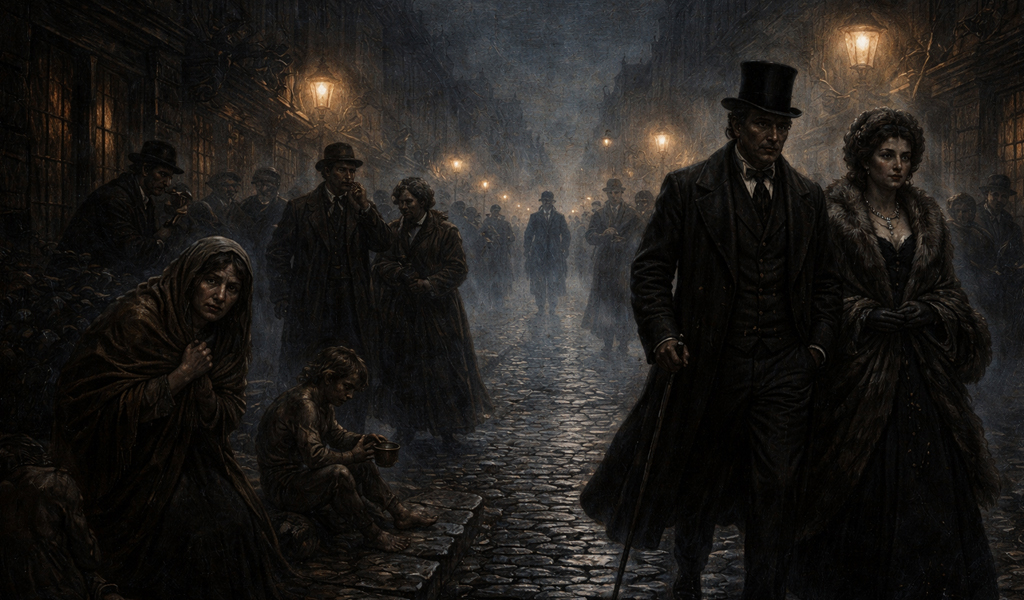
19th century police techniques marked a decisive turning point in the history of criminal investigation. In a context defined by overcrowded cities, rapid industrialization, and emerging forms of crime, modern policing began to take shape amid widespread social distrust and an urgent need for control.
As science advanced at an unprecedented pace, police forces started to adopt systematic methods that permanently transformed the way criminals were pursued and identified. Today, concepts such as forensic photography, identification records, crime scene analysis, and centralized data registries are taken for granted, yet all of them originated in dimly lit laboratories, improvised police offices, and minds obsessed with imposing order on urban chaos.
This article explores the 19th century police techniques that are still alive today—sometimes evolved, sometimes almost unchanged—within police forces across the world.
The crime scene: a new ritual of observation
The arrival of the scientific method
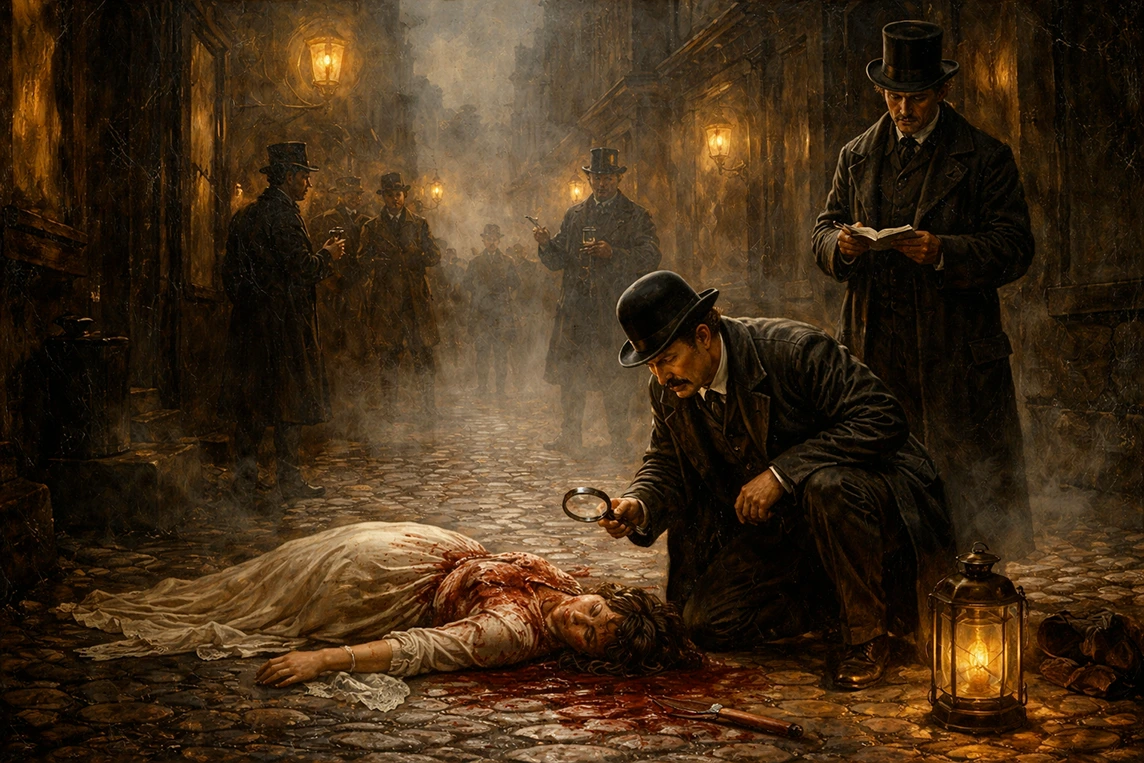
Before the 19th century, crime scenes were chaotic environments. Onlookers, neighbors, police officers, and physicians moved freely through the area, unknowingly contaminating evidence. There were no established procedures or awareness of evidence preservation.
With the development of 19th century police techniques, systematic observation became a priority: nothing was to be touched, and everything had to be documented. Early criminology manuals emphasized the need to record:
-
The exact position of the body
-
The condition and placement of objects
-
Visible traces and marks
-
Biological stains or residues
-
Entry and exit routes
This rational approach became the direct precursor of modern crime scene preservation protocols, which now form the foundation of forensic science.
Bertillonage: the precursor of modern identification
Measuring to identify
In 1883, French criminologist Alphonse Bertillon revolutionized 19th century police techniques with an identification system based on physical measurements. Skull length, arm span, foot size, and other bodily dimensions were used to distinguish individuals through a seemingly scientific method.
The system included:
-
Anthropometric measurements
-
Frontal and profile police photography
-
Individualized record cards stored in archives
Bertillonage allowed, for the first time, the creation of physical databases to identify repeat offenders. Although later replaced by fingerprinting, its influence persists in modern police records and the concept of centralized criminal identity registration.
Fingerprints: the great silent revolution
One print, one life
By the late 19th century, fingerprints gradually replaced bertillonage. Researchers such as Juan Vucetich in Argentina and Francis Galton in Britain demonstrated that each person possesses a unique and unrepeatable fingerprint pattern.
In 1901, Scotland Yard officially adopted fingerprint identification, consolidating one of the most enduring 19th century police techniques. Today, fingerprints are:
-
The foundation of modern biometrics
-
The most widely accepted identification method in courtrooms
-
The backbone of automated systems such as AFIS
The principle that the human body leaves a unique, verifiable trace was born in Victorian police laboratories and offices.
Forensic photography: the camera as an impartial witness
Recording to remember
Forensic photography emerged in Paris and London at the end of the 19th century as a groundbreaking element of 19th century police techniques. It allowed investigators to document crime scenes exactly as they were before any interference.
While witness testimonies were often subjective or contradictory, photographs provided objective, lasting evidence. Today, forensic photography is essential for:
-
Documenting injuries and bodies
-
Recording entire crime scenes
-
Creating three-dimensional reconstructions
-
Presenting visual evidence in court
What began as a rudimentary tool remains a cornerstone of contemporary criminal investigation.
Scientific interrogation: the end of forced confessions
From punishment to psychology
During the 19th century, coercive interrogation methods based on physical punishment began to decline. Influenced by legal medicine and early psychology, 19th century police techniques shifted interrogation toward analytical reasoning.
Investigators focused increasingly on:
-
Logical inconsistencies in statements
-
Narrative micro-details
-
Observation of body language
-
Rational evaluation of motives and opportunities
Though imperfect, these early methods marked the beginning of psychological profiling, now a fundamental tool in police and forensic work.
Centralized archives: the birth of police memory
From disordered boxes to organized systems
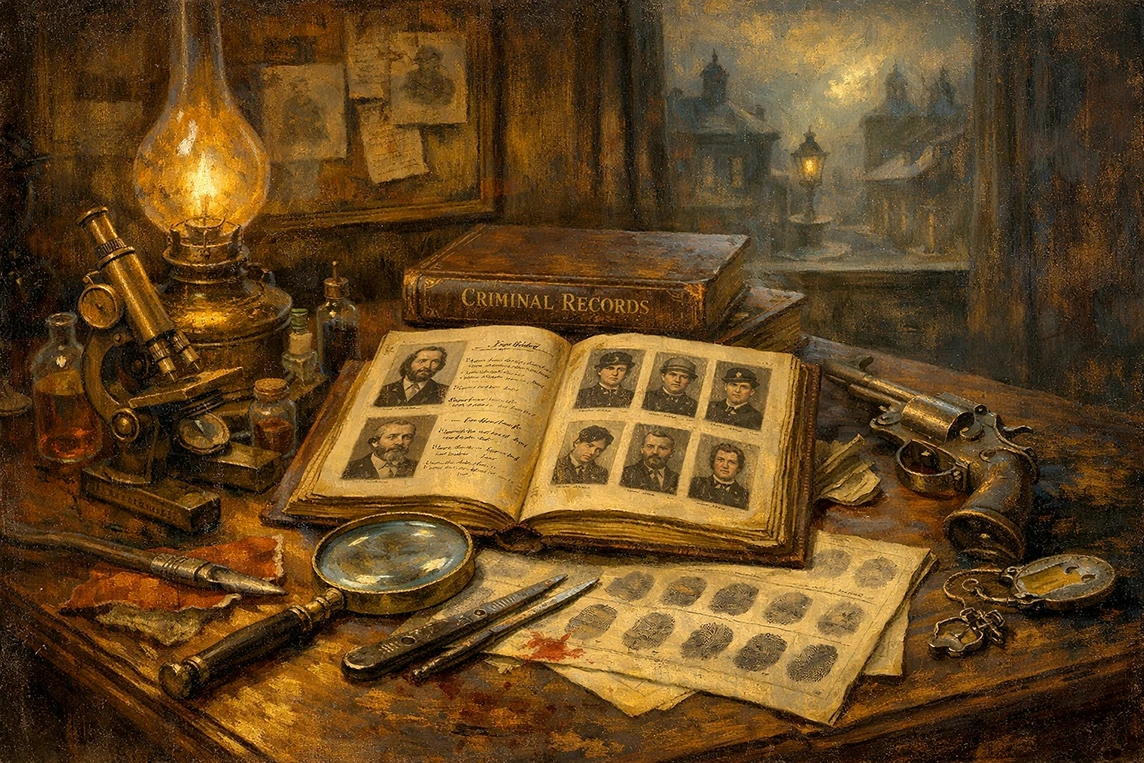
Urban police forces in the 19th century began systematically collecting information: names, criminal histories, methods, aliases, and photographs. These archives represented one of the most influential 19th century police techniques in crime control.
They were the earliest form of what we now call criminal databases. Modern systems—national DNA registries, biometric databases, Interpol, and Europol—are direct descendants of the Victorian obsession with classification and record-keeping.
The modern legacy of 19th century police techniques
What remains alive
Many core tools of modern policing originated in the 19th century:
-
Crime scene analysis
-
Police identification records
-
Forensic photography
-
Fingerprinting
-
Centralized data archives
What evolved
Other 19th century police techniques developed into advanced scientific disciplines:
-
Anthropometry evolved into modern biometrics
-
Positivist criminology became criminal psychology
-
Forensic observation advanced into laboratory science: DNA analysis, forensic chemistry, luminol, and spectrometry
What changed forever
The most profound contribution of the 19th century was not a tool, but a mindset: crime ceased to be viewed as a moral mystery and became a scientific problem.
Conclusion
19th century police techniques not only accompanied industrialization and urban growth; they fundamentally reshaped how crime is understood and investigated.
The forensic practices born in that era transformed policing into a methodical institution capable of turning every crime scene into a scientific puzzle. This conceptual shift—the belief that evil could be studied, classified, and understood—continues to guide investigative forces around the world more than a century later.