Introduction
For centuries, solving a crime depended more on instinct than on evidence. However, with the emergence of forensic science in the 19th century, criminal investigation underwent a radical transformation. Microscopes, photography, and laboratory analysis replaced intuition with systematic observation. In the Victorian era, the detective ceased to be a romantic figure guided by hunches and became a methodical observer, almost a scientist.
The birth of modern criminology, driven directly by forensic science in the 19th century, not only changed how killers were caught but also reshaped how society began to understand the criminal mind and the nature of crime itself.
The Turning Point of the 19th Century
From Instinct to Method
Until the mid-19th century, most criminal investigations relied on confessions obtained under pressure, rumors, or simple “gut feelings.” With the rise of positivist thinking, a new mindset prevailed: everything had to be proven, measured, and classified.
Forensic science in the 19th century introduced a structural shift in justice by demanding verifiable evidence and repeatable procedures. Crime was no longer interpreted purely as a moral mystery but addressed as an empirical problem.
The Laboratory as the New Battleground
With advances in analytical chemistry and legal medicine, laboratories became the new front line against crime. Blood analysis, toxicology tests, and early ballistic studies made it possible to identify causes of death and reconstruct events with unprecedented accuracy.
Through forensic science in the 19th century, criminal investigation was consolidated as a technical discipline supported by protocols and scientific observation.
The Birth of Criminology
Cesare Lombroso and the “Born Criminal”
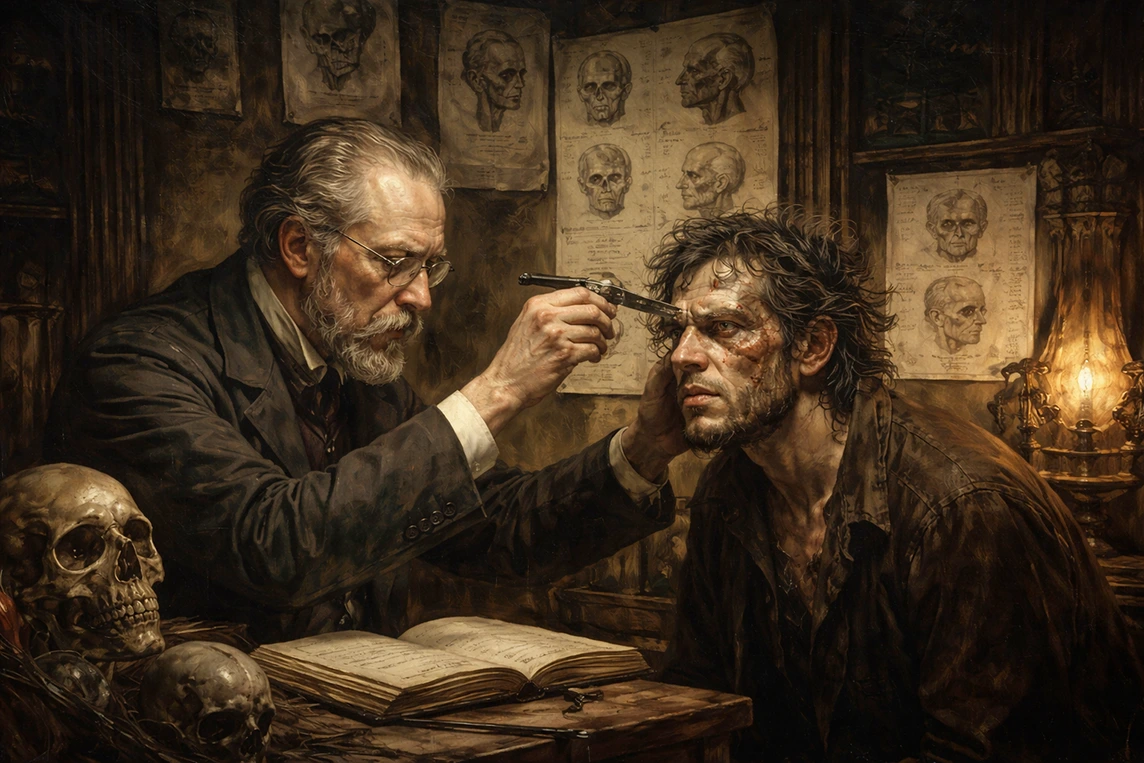
In 1876, the Italian physician Cesare Lombroso published L’uomo delinquente, proposing the theory of the “born criminal,” identifiable through physical traits. Although these ideas are now considered obsolete, his approach marked a milestone: crime became an object of scientific study.
Within the framework of forensic science in the 19th century, Lombroso opened the door to systematic analysis of criminal behavior, attempting to answer a fundamental question: why does someone kill?
Alphonse Bertillon and Human Identification
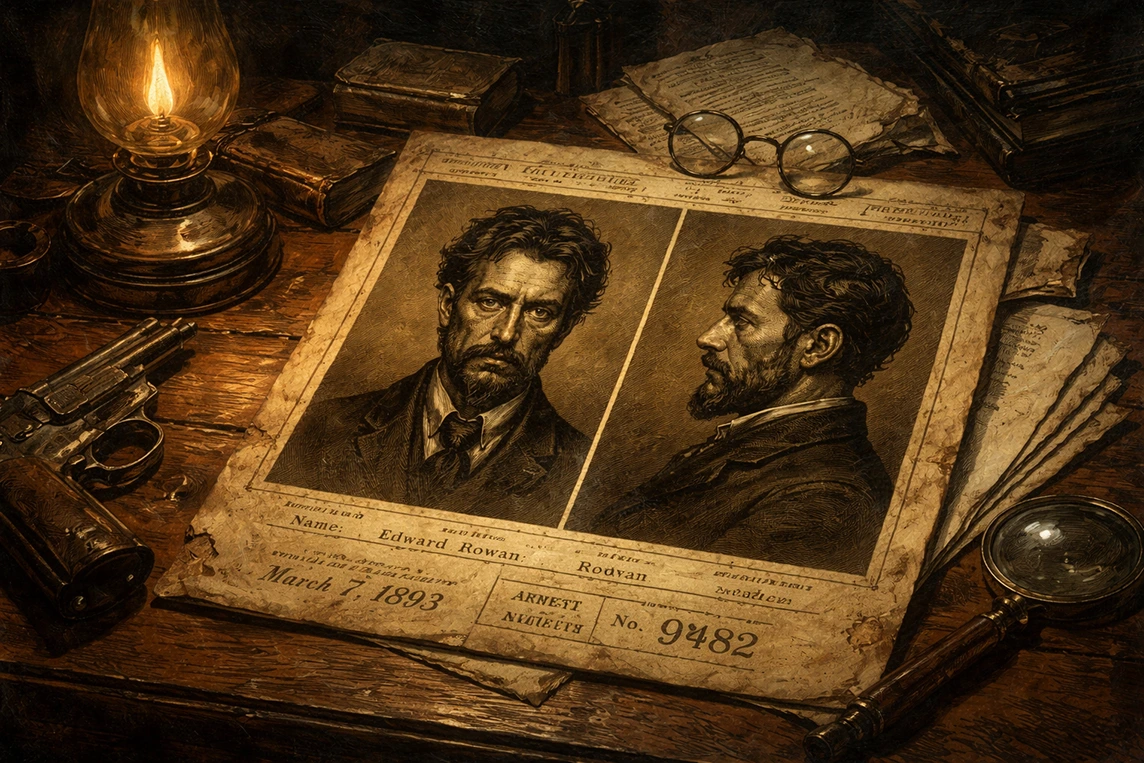
In 1883, Frenchman Alphonse Bertillon developed the Bertillon system, an identification method based on body measurements and standardized photography. It was the first attempt to create a criminal identification database before the adoption of fingerprints.
Thanks to forensic science in the 19th century, the human body itself became evidence, record, and objective proof within the judicial process.
Fingerprints: A Silent Revolution
From Paper to Police Records
In 1892, Argentine police official Juan Vucetich used fingerprints for the first time to solve a murder in La Plata. Shortly afterward, the system was adopted by Scotland Yard, marking a turning point in criminal investigation.
Forensic science in the 19th century thus eliminated anonymity in crime: every individual left a unique and unrepeatable mark.
The Fingerprint as a Mark of Fate
Fingerprints changed the narrative of crime. Where killers once could disappear or reinvent themselves, they were now trapped by an invisible detail.
In the popular imagination, justice became microscopic, and forensic science in the 19th century reinforced the idea that every particle could be decisive evidence.
Photography and Visual Evidence
The Camera as Witness
Forensic photography was born in the basements of the Paris police and quickly spread across Europe. Images of crime scenes allowed investigators to reconstruct events more accurately and served as visual proof against unreliable testimony.
Within forensic science in the 19th century, the camera became a silent witness, capable of recording what human memory might distort or forget.
The Archive of Horror
Bertillon’s criminal albums and the collections of the London Police Museum became true encyclopedias of evil. The killer was no longer just an immediate threat but a subject of systematic study.
Society began to view crime with a mixture of fear and scientific fascination, driven by advances in forensic science in the 19th century.
The Figure of the Scientific Detective
The Heir of Reason
Inspired by these advances, Arthur Conan Doyle created Sherlock Holmes, the ultimate symbol of the rational investigator. His method—observe, deduce, verify—faithfully reflected the principles of forensic science in the 19th century.
Holmes demonstrated that scientific reasoning could be as powerful as any weapon.
Between the Microscope and Morality
However, this objectivity came at a cost. The more the killer was analyzed, the more blurred the line between good and evil became. The detective no longer sought justice alone, but understanding—an essential concern of forensic science in the 19th century.
Science, Fear, and Fascination
Rationality Confronting Mystery
Science promised order, yet it also revealed the complexity of the human soul. Each new method exposed uncomfortable truths, showing that crime was not always monstrous but deeply human and open to analysis.
Forensic science in the 19th century transformed mystery into an object of study without entirely eliminating fear.
From the Morgue to Myth
The laboratories and forensic halls of the 19th century not only reformed justice but also inspired literature, art, and theater. Victorian society discovered that scientific truth could be as unsettling as crime itself.
Conclusion
Forensic science in the 19th century irreversibly changed how killers were caught and how crime was understood. What began as a search for evidence became a profound exploration of the human mind.
From Victorian laboratories to modern forensic science, every investigative tool reflects our enduring need for control, truth, and redemption—a legacy born from the scientific revolution that forever transformed justice.