Introduction
In recent years, narrative board games Opus Mortis and similar titles have evolved from a niche curiosity into a central presence on gaming tables around the world. More and more players are searching for stories they can live through, not just play, experiences that blend emotion, strategy and storytelling into a single, meaningful whole.
During the development of Opus Mortis, it became clear that the rise of narrative board games was not a passing trend, but a natural response to our need to connect with deeper, more human stories—even when those stories confront us with fear, doubt or moral darkness. In this context, narrative board games Opus Mortis embody that desire for emotionally driven tabletop experiences.
“We didn’t want players to simply move pieces, but to feel that every decision carries emotional weight.”
— Opus Mortis creative team
A new generation of tabletop experiences
Today’s audience wants more than winning or losing; they want to be immersed in a story that reacts to their choices. This is where narrative board games Opus Mortis align perfectly with a new generation of design philosophies focused on immersion rather than pure optimization.
Narrative board games achieve this depth through three core pillars:
-
Branching storytelling – Every decision alters the course of the game.
-
Purpose-driven characters – No anonymous pieces, only characters with history, motivations and inner conflict.
-
Shared emotion – Cooperation or confrontation becomes a collective emotional experience.
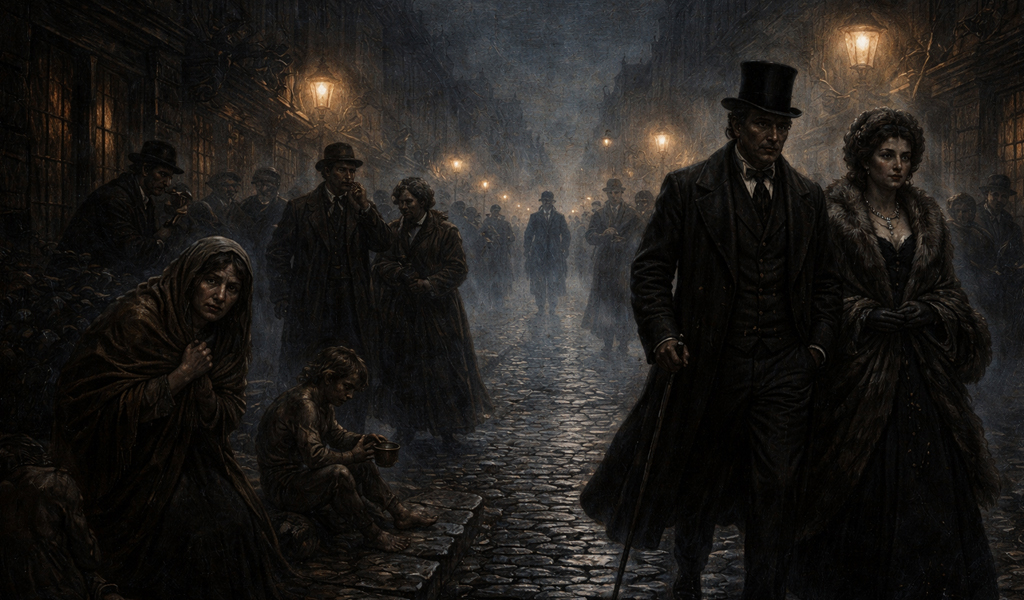
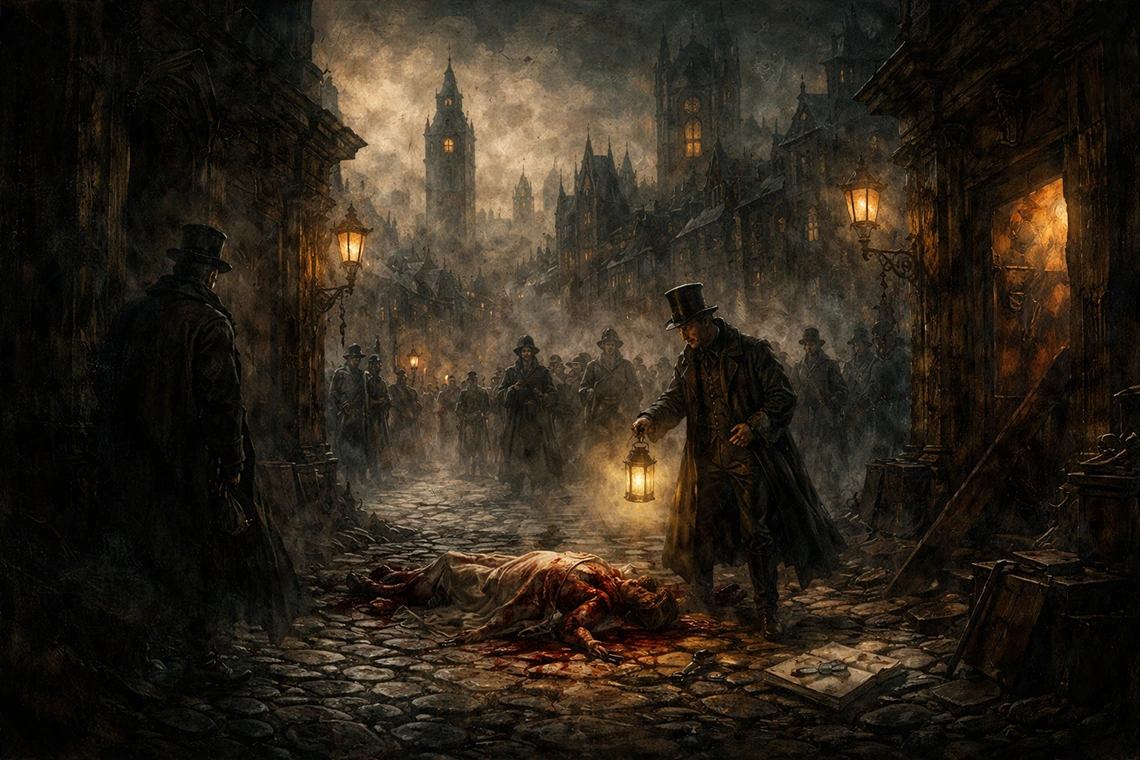
In Opus Mortis, these elements combine to create an experience that goes beyond deduction: players become protagonists in a moral tragedy set in the darkest corners of Victorian London, where each action leaves a narrative mark.
Why narrative board games are thriving
The growth of this genre, and especially of narrative board games Opus Mortis, is driven by several clear factors:
-
Emotional connection: creating a personal story leads to more memorable experiences.
-
Accessibility: rules are intuitive; complexity lies in decisions, not mechanics.
-
Replayability: each session feels unique thanks to evolving narratives.
-
Transmedia influence: TV series, video games and literature expand playable universes.
On platforms such as Kickstarter or Gamefound, narrative board games consistently rank among the most funded projects. Players are not just purchasing a product; they are investing in a story that grows with each playthrough.
From mechanics to storytelling: a paradigm shift
For decades, board games focused primarily on calculation and resource management. Today, the heart of design lies in how mechanics tell a story and reinforce emotional engagement.
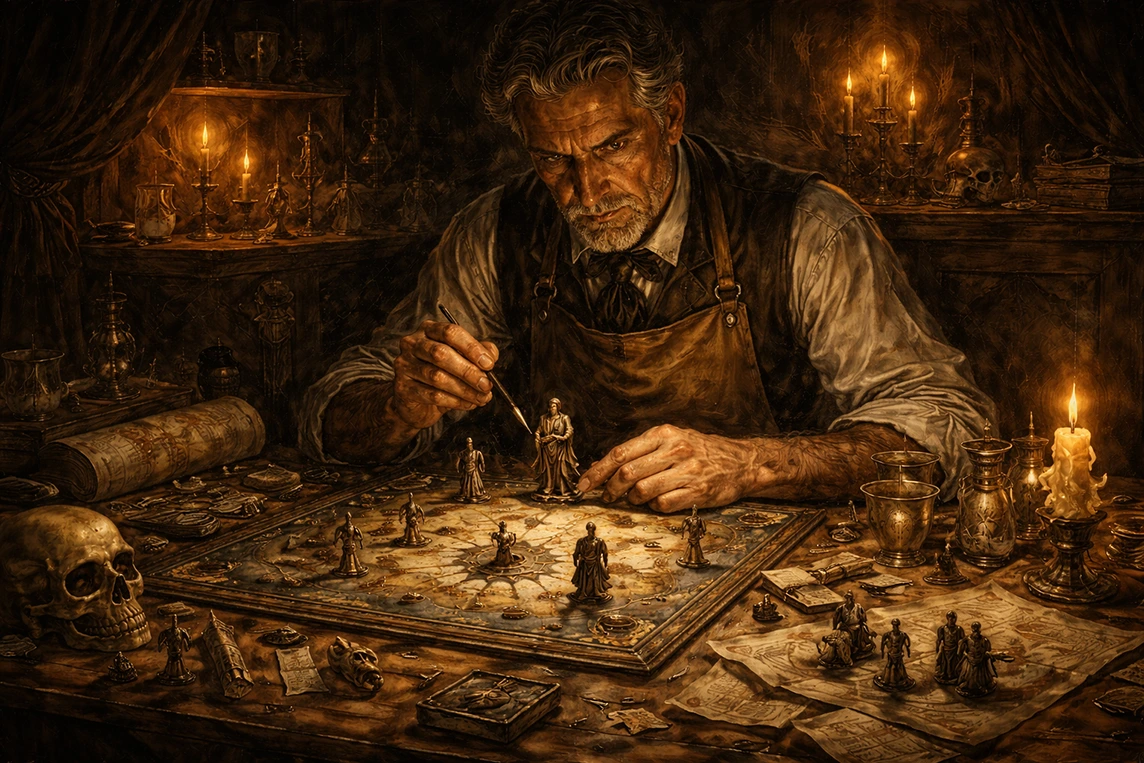
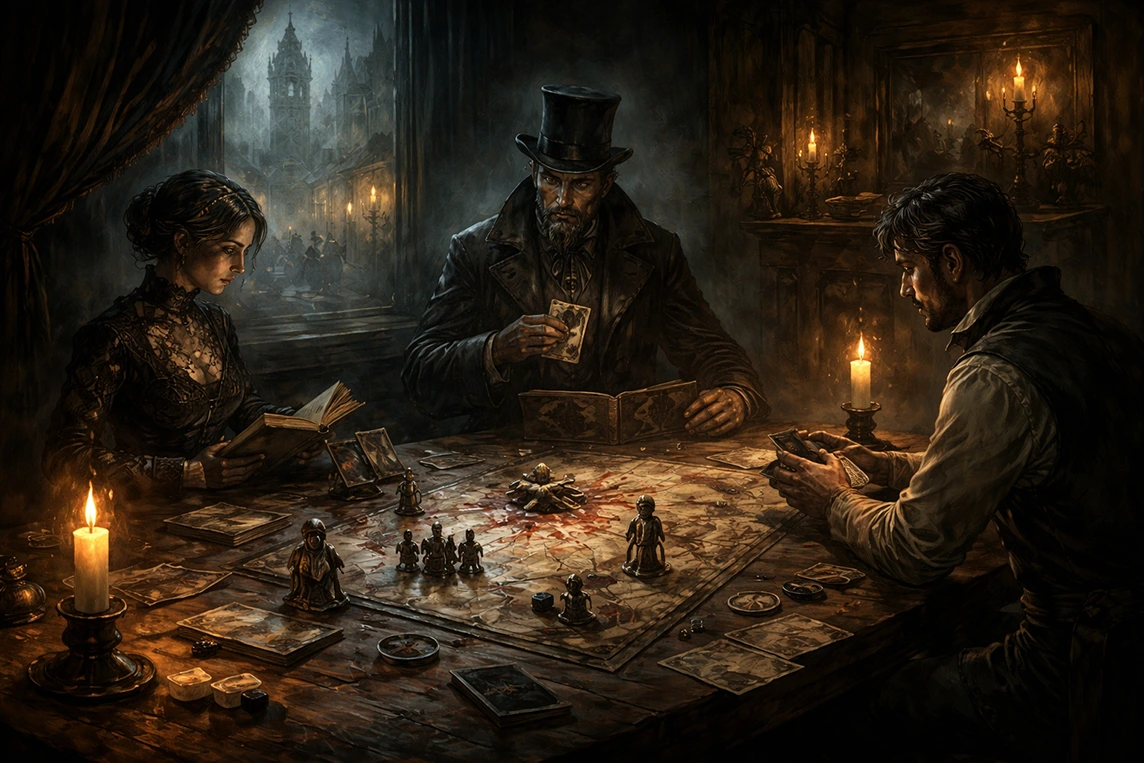
In narrative board games Opus Mortis, dice, cards and hidden roles are not abstract tools; each component serves a narrative purpose. A dice roll may unlock a forgotten memory, while a single card can condemn an innocent character and alter the fate of the entire table.
The game becomes a language of its own, where emotions matter as much as rules, and every interaction contributes to a shared story.
Influences and references behind this evolution
The current rise of narrative board games is rooted in pioneering titles that reshaped how stories could be told on a tabletop. From Arkham Horror and T.I.M.E Stories to Detective and Mansions of Madness, these games proved that narrative could be the true engine of design.
However, narrative board games Opus Mortis go a step further by integrating psychological horror, cooperative investigation and moral dilemmas into a single cohesive system. Each player experiences a story where trust is constantly tested, and where silence from others may be the most valuable clue.
“During development, we realized that suspense doesn’t live on the board, but in the player’s gaze.”
— Narrative designer of Opus Mortis
What makes Opus Mortis unique within this trend
The rise of narrative board games has created space for titles with strong, distinctive identities. Narrative board games Opus Mortis stand out by combining:
-
A morally ambiguous universe where no one is entirely innocent.
-
A gothic, realistic visual style inspired by Victorian art and literature.
-
Branching narratives with multiple endings and paths.
-
Hidden roles that introduce tension, suspicion and surprise.
-
Mechanics that reinforce storytelling rather than interrupt it.
The result is a game that feels alive, with each session acting as a new chapter in a collective story shaped by the players.
The future of narrative board games
The growth of this trend shows no sign of slowing down. Publishers increasingly support projects where writing, atmosphere and art direction are as important as mechanics.
Players, in turn, demand more immersive, emotional and meaningful experiences. In this landscape, narrative board games Opus Mortis position themselves as part of a new generation that fuses storytelling, psychological horror and cooperation into a balanced and compelling whole.
This is not just about playing; it is about living, interpreting and remembering shared stories.
Conclusion: story as the engine of play
The rise of narrative board games Opus Mortis demonstrates that emotion is the most powerful rule system of all. When a story resonates, mechanics become vessels of meaning rather than obstacles.
That is exactly what Opus Mortis offers: a game where fear, morality and intrigue coexist in balance, and where each player unknowingly becomes both author and victim of their own story.
Opus Mortis does not merely follow the narrative board game trend—it transforms it. Because understanding the rise of narrative board games Opus Mortis ultimately means understanding why storytelling remains the most human way to play.